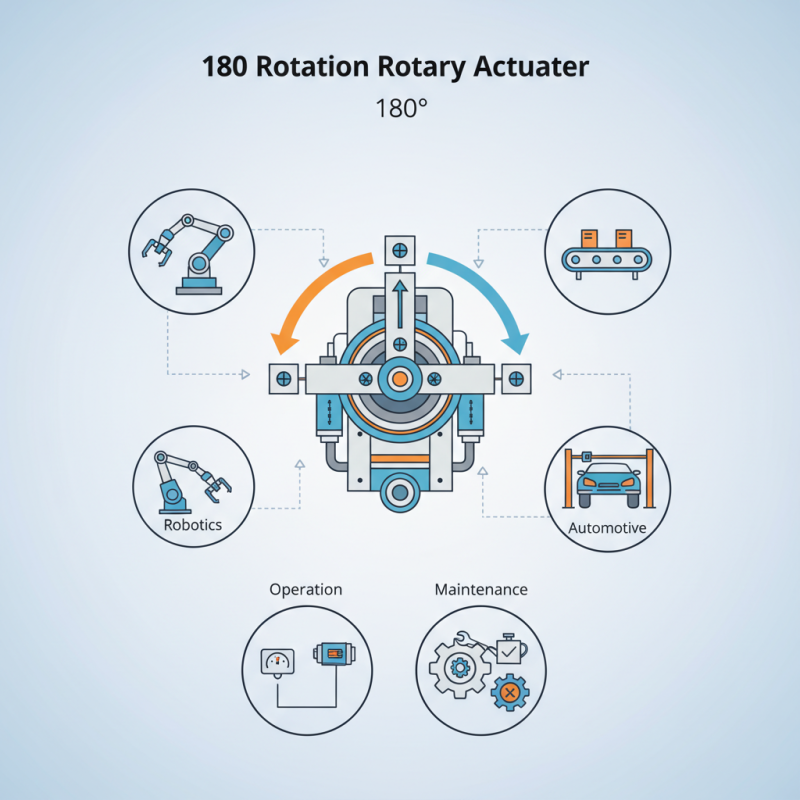
What is a 180 Rotation Rotary Actuator and How Does It Work?
The 180 Rotation Rotary Actuator is a fascinating device in automation. It allows for precise movement and control in various applications. This actuator is designed to rotate an object or mechanism up to 180 degrees.
Many industries utilize the 180 Rotation Rotary Actuator. For example, robotics, manufacturing, and automotive sectors depend on this technology. It simplifies complex processes and enhances efficiency. However, understanding its mechanics can be challenging.
A key aspect is how the actuator operates. It typically uses electric or pneumatic power to achieve rotation. While the concept seems straightforward, there are nuances in its design. Maintenance is crucial to ensure longevity. Over time, wear and tear can affect performance. Exploring these details can reveal both the strengths and weaknesses of this innovative device.
What is a 180 Rotation Rotary Actuator?
A 180 Rotation Rotary Actuator is an essential component in various automation systems. These devices allow for precise positioning as they enable a rotational movement of 180 degrees. They are commonly used in applications like robotics, assembly lines, and packaging systems. According to a recent industry report, the demand for rotary actuators is expected to grow by 5.8% annually through 2025.
This actuator consists of a motor that drives a gearbox connected to an output shaft. The design ensures high torque and reliability. The smooth operation of a 180 Rotation Rotary Actuator depends on its internal mechanisms. Factors like lubrication and material quality significantly impact performance. In some cases, users may overlook regular maintenance, leading to premature wear.
Tips: Always lubricate the actuator as recommended. Regular inspections help catch issues early. This can save time and costs.
Selecting the right actuator can be challenging. Consider factors like load, speed, and environmental conditions. Sometimes, users choose based on cost alone. This may lead to suboptimal performance or even failure in critical applications. Identifying the proper specifications is vital for successful integration into any automated system.
Key Components of a 180 Rotation Rotary Actuator
A 180 rotation rotary actuator is a fascinating device. It is used for various applications that require precise rotational movement. The key components of this actuator include the motor, gear train, and output shaft. Each part plays a vital role in how the actuator functions.
The motor provides the necessary power. It converts electrical energy into mechanical energy. The gear train reduces the speed while increasing torque, allowing for greater control. The output shaft then translates this motion, enabling the desired rotation. These components work together seamlessly.
However, there can be challenges. Sometimes, the motor may overheat or wear out, affecting efficiency. Gear slippage can occur as well, leading to inaccuracies. Regular maintenance is essential but often overlooked. Users must pay attention to these potential issues to maintain optimal performance.
How Does a 180 Rotation Rotary Actuator Operate?
A 180 rotation rotary actuator is a device that provides precise control over angular movement. It typically operates through an internal motor mechanism that converts rotational movement into output shaft position. The actuator's design can include gears, allowing for speed variations and torque adjustments, making it ideal for various applications.
In operation, these actuators are crucial in sectors like robotics and automation. A report from the International Society of Automation highlights a growth in demand for rotary actuators by up to 25% annually. This increase reflects their utility in diverse projects, from assembly lines to robotic arms. The actuator's response time and accuracy are pivotal for success. Errors in positioning can lead to significant operational delays.
However, the efficiency of a 180 rotation rotary actuator can be hindered by several factors. Environmental conditions, such as extreme temperatures, can affect performance. Additionally, wear and tear from regular use can decrease accuracy over time. Implementing regular maintenance can mitigate these issues but requires careful planning and execution. Moreover, not all systems can adapt seamlessly to actuator technology, leading to operational incompatibility.
Performance Characteristics of 180° Rotation Rotary Actuators
This bar chart illustrates the performance characteristics of a 180° rotation rotary actuator, including parameters such as torque, speed, response time, load capacity, and power consumption.
Applications of 180 Rotation Rotary Actuators in Industry
180 Rotation Rotary Actuators play a crucial role in various industries. These devices provide precise movement and can rotate an object up to 180 degrees. In manufacturing, they help automate tasks that require consistent movement. For instance, they can be found in packaging machines where orientation matters. Products often need to flip or tilt during packaging. The actuators ensure this process runs smoothly and efficiently.
Another common application is in robotics. Here, these actuators assist in creating fluid motions for robotic arms. They enable tasks like picking and placing items. Using a rotary actuator can improve speed and accuracy. However, not all systems are flawless. Some users struggle with integration into existing setups. Limited space can also pose a challenge. Balancing the actuator's size and power is sometimes overlooked.
Moreover, food and beverage industries utilize these actuators for better handling of products. They help with sorting and ensuring quality control. But, the cleaning process for hygiene must be considered. Ensuring no residue is left behind can be tricky. Companies must continually assess their methods. In this way, 180 Rotation Rotary Actuators present both solutions and challenges in industry applications.
Benefits of Using a 180 Rotation Rotary Actuator in Automation Systems
A 180-degree rotation rotary actuator is critical in automation systems. Its role is to provide precise and efficient motion control. These actuators can turn mechanical components quickly, often in less than a second. According to a recent industry report, using such actuators can enhance system efficiency by up to 30%. This improvement maximizes productivity in various applications.
Automation systems are increasingly opting for 180-degree rotary actuators due to their versatile benefits. They are compact, easy to integrate, and require minimal maintenance. These features save both time and money for manufacturers. In environments where space is limited, the small footprint of these actuators makes them ideal. However, it's important to consider potential limitations, such as torque capacity. If the torque is insufficient, it can hinder performance.
Moreover, accurate feedback mechanisms integrated into these actuators are vital. They ensure consistent operation and prevent mechanical failures. A lack of feedback can lead to issues in high-stakes environments, affecting overall system reliability. Balancing cost with performance remains crucial for users. Businesses must carefully analyze their specific needs to implement effective solutions.