2026 Top Injection Molding Machine With Robot Benefits?
The integration of robotic technology in injection molding machines is transforming the manufacturing landscape. The 2026 Top Injection Molding Machine With Robot not only enhances productivity but also minimizes waste. Industry reports indicate that automation can lead to a 20-30% increase in efficiency. Furthermore, about 65% of manufacturers are actively pursuing robotic solutions for their production lines.
This shift towards automation doesn't come without concerns. Many companies face a steep learning curve when integrating robots. Employees may resist these changes, fearing job loss. However, studies show that automation can create new job opportunities. For example, skilled technicians for machine maintenance are increasingly in demand, highlighting a shift in workforce requirements.
Moreover, the cost of entry is a barrier for some smaller manufacturers. The initial investment in an Injection Molding Machine With Robot can be significant. Long-term benefits, such as reduced labor costs and improved consistency, often offset this expense. Ultimately, embracing this technology poses challenges and opportunities that require careful consideration.
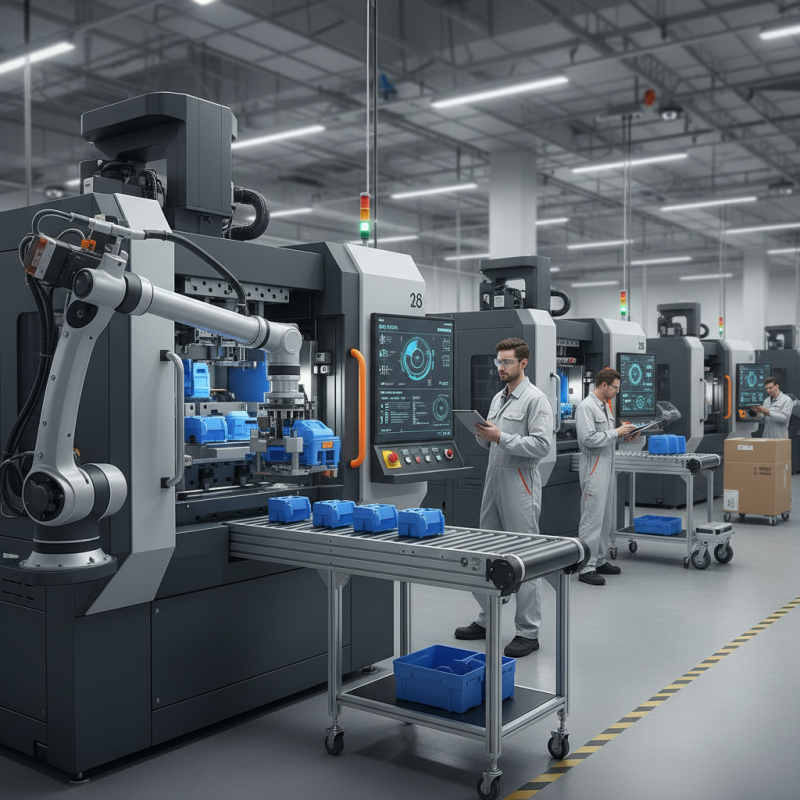
Overview of Injection Molding Machines and Their Functionality
Injection molding machines are vital in manufacturing. They convert plastic materials into finished products. This process involves melting plastic pellets. Hot, molten plastic is injected into molds under high pressure. Once cooled, the mold is removed to reveal the final shape.
A recent industry report from Mordor Intelligence indicates that the global injection molding machine market is expected to grow by 4.5% annually. This growth is driven by the increasing demand for lightweight and durable products in various sectors. From automotive to consumer goods, these machines play a critical role. They can produce complex shapes efficiently and with minimal waste.
Tips: Regular maintenance of the machine is essential. Check the hydraulic fluid levels frequently. It helps to avoid performance issues. Analyzing the cycle time can lead to improvements in productivity. Furthermore, consider training staff on advanced settings. An informed operator can optimize machine performance considerably. Always be aware of safety protocols; minor oversights can lead to incidents.
The Rise of Automation: Integrating Robots with Injection Molding Machines
The integration of robots with injection molding machines is transforming the manufacturing landscape. According to a recent industry report, automation can boost production efficiency by up to 30%. Robots handle tasks like part removal, reducing the risk of human error. This leads to consistent quality in every production cycle.
However, implementing automation is not without challenges. Initial costs can be high. Companies may face difficulties in training employees to work alongside advanced technology. The integration process requires careful planning to avoid disruptions. Yet, the benefits often outweigh these concerns. Automated systems can operate continuously, maximizing output and minimizing downtime.
Data indicates that the demand for injection molding machines with robotic systems is growing. By 2026, the global market for this technology is expected to reach USD 15 billion. Manufacturing companies are recognizing the need to adapt. They must reconsider their traditional methods, balancing innovation with their existing workflows. The shift towards automation is a necessary evolution, but it requires commitment and strategy.
Key Benefits of Using Robots in Injection Molding Processes
Robots are transforming the injection molding industry. They automate tasks like material handling and assembly. This leads to increased efficiency and reduced labor costs. With robots, manufacturers can produce items with greater precision. The variability in human performance is eliminated. As a result, the quality of molded products improves significantly.
Using robots in injection molding also enhances safety. Workers can avoid dangerous tasks, thus minimizing accidents. However, it’s crucial to address training for existing staff. Transitioning to robotic systems can be challenging. Companies must invest in proper protocols and maintenance. Not all operations benefit from automation. Some may find that a blend of human workers and robots suits them best.
Lastly, integration can be complex. The initial costs are higher, and return on investment may take time. Businesses should weigh the pros and cons carefully. Despite challenges, many find that robots streamline processes and open new opportunities. Ensuring that human expertise and robotic efficiency work together can provide significant advantages.
Innovative Features of 2026 Injection Molding Machines with Robotics
The 2026 injection molding machines are set to revolutionize the industry with their innovative robotic features. Recent reports indicate that integrating robotics can enhance production efficiency by as much as 30%. This improvement is significant, especially in high-demand sectors such as automotive and consumer goods.
Robotic arms are designed for precision and speed. They can handle complex tasks with minimal human intervention, reducing the potential for errors. Industry data suggests that automation in molding operations can lead to a decreased cycle time, improving overall throughput. For instance, a machine equipped with advanced robotics can achieve cycle times of less than 20 seconds per part.
However, the rise of robotic integration also presents challenges. High initial costs can deter smaller manufacturers from adopting these technologies. Furthermore, the training required for staff to interact with these advanced systems can be extensive. While the benefits are clear, businesses must weigh these factors carefully to ensure a worthwhile investment. Some companies may find themselves grappling with the transition, questioning the balance between automation and human oversight. The need for continuous evaluation and adaptation in this evolving landscape is crucial.
Future Trends in Injection Molding Technology and Automation
The future of injection molding technology is bright, particularly with the integration of automation. Automated systems can enhance efficiency by reducing cycle times. These robots can grasp and place parts accurately, minimizing human error. Workers can shift their focus to quality control, helping improve overall production standards.
In the coming years, there may be challenges to address. As machines evolve, the need for training will increase. Workers must adapt to new technologies. This shift could create some initial resistance. Understanding how automation influences job roles will be key. Communication within teams will play a vital role in this transition.
While automation boosts efficiency, it may also require new skills. Traditional methods may not suffice anymore. Continuous learning will be essential for workers to stay relevant. Companies might struggle with resource allocation for training. Balancing technology and workforce dynamics will be crucial as the landscape evolves.