
7 Best ERW Pipe Suppliers for Global Buyers

Choosing an ERW pipe supplier involves more than comparing prices. Global buyers must match pipe dimensions, steel grades, manufacturing standards, and delivery schedules to each project. Small details matter. A difference in wall thickness or outside diameter can affect installation, while unclear coating specifications may create costly delays.

This guide introduces seven ERW Pipe suppliers for buyers assessing options across international markets. It focuses on practical factors: product range, available sizes, quality documentation, export experience, and communication during quotation and order handling. Ask for current mill test certificates, inspection details, and confirmation that quoted specifications match your drawings. Check packaging and shipping terms, too. A reliable supplier should explain lead times clearly and flag production limits before an order is placed.

No shortlist fits every project. A supplier with a broad catalog may not offer the best lead time for a specific grade, and an attractive quotation may leave key details unanswered. That deserves a second look. Use these supplier profiles as a starting point, then verify capabilities directly and compare like-for-like quotations. Careful checks do not remove every risk, but they make purchasing decisions more transparent and easier to defend.
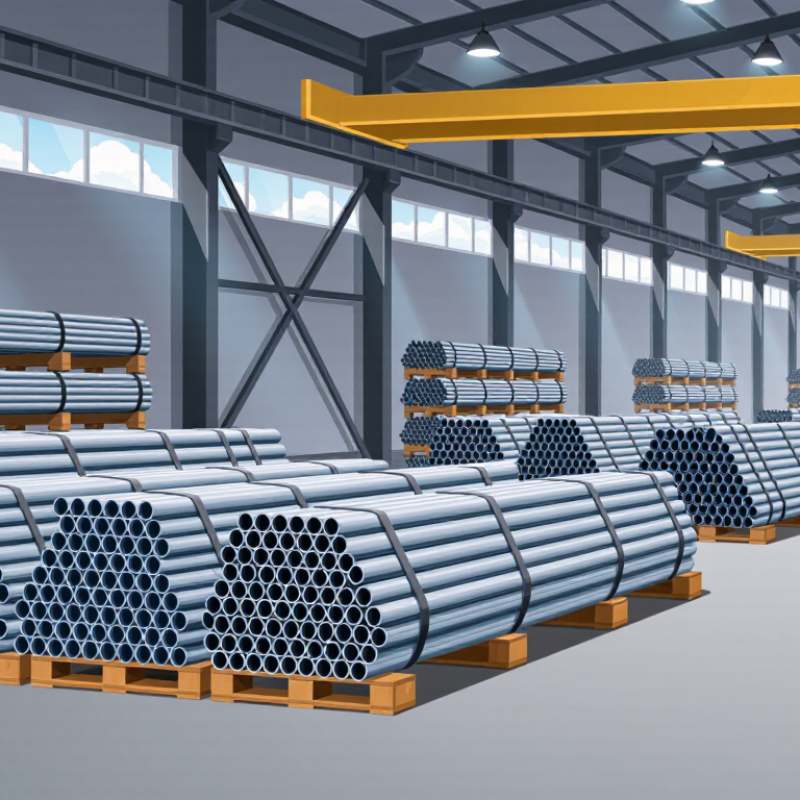
7 Best ERW Pipe Suppliers for Global Buyers

ERW Pipe Basics: Manufacturing, Weld Types, and Common Grades

ERW pipe starts as a flat steel coil, slit to width and formed into a round shape by rollers. At the seam, high-frequency electrical current heats the edges; pressure joins them without filler metal. The weld bead is then trimmed, and the pipe is sized and cut. Small details matter. Edge alignment and temperature affect seam quality.

Most modern ERW pipe uses high-frequency welding, while low-frequency ERW is found in older production. Both create a longitudinal seam, not a spiral one. Buyers should check how the manufacturer verifies the weld, including ultrasonic or other appropriate nondestructive testing.

A clean surface is useful, but it cannot prove the seam is sound. That sounds simple. It isn’t.

Common carbon-steel grades include ASTM A53 Grade B and API 5L grades such as B, X42, and X52. They are not interchangeable by name alone. Confirm the specified standard, grade, dimensions, intended service, and required inspection documents before ordering. In practice, wall thickness and end preparation can matter as much as the grade. A pipe may look right on a rack and still miss the project’s pressure or fit-up needs. Specification wording deserves a second look.

Industry Standards: API 5L PSL1/PSL2 and ASTM A53

For global buyers, API 5L and ASTM A53 serve different needs; they are not interchangeable labels. API Specification 5L covers line pipe for pipeline transportation systems. PSL1 sets baseline requirements, while PSL2 adds controls such as stricter chemical limits, testing, and traceability. Exact obligations depend on grade, dimensions, and order details. Buyers should check the current API edition and the purchase specification, not rely on a supplier’s shorthand.

ASTM A53/A53M covers seamless and welded steel pipe in Grades A and B, including black and hot-dipped galvanized products. It is commonly specified for mechanical and pressure applications, but it does not replace API 5L when a project requires line-pipe qualifications.

Scale matters: World Steel Association’s World Steel in Figures 2024 reports global crude steel production of 1,892.2 million tonnes in 2023. Large output does not guarantee the right pipe.

Ask for heat-specific test reports, dimensional records, and clear marking; then match them to the ordered standard and grade. A certificate can look tidy. The details matter more.

Verify test scope, acceptance criteria, and traceability before shipment, especially when PSL2 is specified. One uncomfortable point: paperwork alone cannot prove every handling or inspection step was performed correctly.

Supplier Evaluation: Production Capacity, Quality Systems, and Certifications

A useful ERW pipe supplier review starts with production capacity, not a headline figure. Ask for monthly output by diameter, wall thickness, and steel grade. A mill may quote impressive tonnage, yet its forming line may not handle your specification efficiently. Check shift patterns, line speed, changeover time, and planned maintenance. Ask how it manages peak orders. Details matter.

Quality systems should connect each pipe to its production records. Request a sample inspection plan covering dimensions, weld integrity, hydrostatic testing, and surface condition. Then check whether heat numbers remain traceable from incoming coil to finished bundles. Look at how nonconforming material is isolated and corrective actions are recorded. A polished procedure is not enough. Review a recent, anonymized inspection report and compare its measurements with your purchase requirements.

Certifications need careful checking. Confirm the issuing body, validity dates, facility address, and product scope; a certificate may not cover every plant or pipe grade. Where practical, arrange a remote or on-site audit and observe how records match the actual line. Capacity figures and certificates can both look convincing on paper. I would still leave room for doubt until production evidence, test records, and delivery history agree.

ERW Pipe Supplier Evaluation: API 5L Grade Reference

Minimum specified yield strength for selected API 5L line-pipe grades

Yield-strength values are grade specifications, not supplier performance data. Buyers can use them to screen product capability, then verify applicable grades, manufacturing scope, quality systems, and certifications with each supplier.

Seven Supplier Profiles: Product Ranges, Export Markets, and Services

The strongest ERW pipe suppliers differ in more than price. Supplier One focuses on standard carbon-steel pipe for construction and water projects, while Supplier Two offers larger diameters for piling and structural work. Supplier Three serves buyers needing cut-to-length sections and clear dimensional records.

Details matter. Ask each supplier for current mill test certificates, wall-thickness tolerances, and coating options.

Supplier Four may suit distributors seeking regular container shipments and mixed-size orders. Supplier Five specializes in project supply, coordinating production schedules, packing lists, and inspection appointments. Their export markets can vary by product range and shipping access, so request recent destination references rather than relying on a broad market claim.

Not always. A polished catalogue does not prove consistent delivery.

Supplier Six may offer threaded ends, beveling, or protective caps, reducing preparation at the job site. Supplier Seven could be a better fit for custom specifications and third-party inspection support. Compare service response times, packaging details, and how suppliers handle rejected or damaged material.

A missed delivery date can outweigh a small unit-price saving.

These profiles are a starting point, not a ranking: confirm standards, production capacity, and shipment terms for the exact order.

Buyer Verification: Mill Test Certificates, Inspection, and Delivery Terms

For ERW pipe, a mill test certificate should connect the paperwork to the steel on the truck. Check the heat number, grade, dimensions, chemical results, and tensile values against the pipe markings and purchase order. An EN 10204 Type 3.1 certificate is commonly used for manufacturer-certified inspection results. Paper is not proof. If a detail is missing, ask the mill to clarify it before dispatch. A small mismatch can become a costly delay at the receiving yard.

Tips: Request a sample certificate before ordering. Arrange independent inspection to verify diameter, wall thickness, weld appearance, quantity, and bundle labels. Ask for dated photos before loading, plus the packing list and shipment marks. Check before loading.

Delivery terms need equal attention. Name the exact delivery point and confirm who pays freight, insurance, unloading, and destination charges. UNCTAD’s Review of Maritime Transport 2024 reports that seaborne trade grew 2.4% in 2023, while route disruption and freight volatility remained concerns. That context makes a written shipment schedule and delay-notification process practical safeguards. One weak spot is often overlooked: buyers may verify the pipes carefully but leave inspection timing vague. Set the inspection window, document format, and release conditions in the contract.