
China Top 10 Insulin Syringe Manufacturers for Buyers

Choosing an Insulin Syringe manufacturer requires more than comparing unit prices. The International Diabetes Federation’s 2025 Diabetes Atlas estimates that 589 million adults aged 20–79 live with diabetes worldwide; the number could reach 853 million by 2050. These figures point to sustained demand for dependable insulin-delivery supplies. They do not, by themselves, measure syringe demand, so buyers should avoid treating diabetes prevalence as a market-size forecast.

“Insulin does not belong to me, it belongs to the world.” This statement is widely attributed to Frederick Banting, one of insulin’s co-discoverers. Its spirit still matters: practical access depends on products that are safe, consistent, and available. Small details matter. Buyers comparing China’s top manufacturers should check capacity, quality-management documentation, batch traceability, export experience, and responsiveness to audits. They should also verify the syringe’s graduations, needle options, packaging, and compatibility with intended use. ISO 8537 specifies requirements for sterile, single-use syringes for insulin, offering a useful reference point for technical discussions.

A polished catalog is not proof of reliable production. Ask for current certificates and relevant test records, then confirm their scope and validity independently. Request samples and inspect the markings under ordinary clinic lighting; unclear graduations can be easy to overlook. This guide introduces ten manufacturers and practical questions for evaluating them. One limitation remains: supplier information changes, and public claims may not reveal factory-level performance. Due diligence is still necessary.
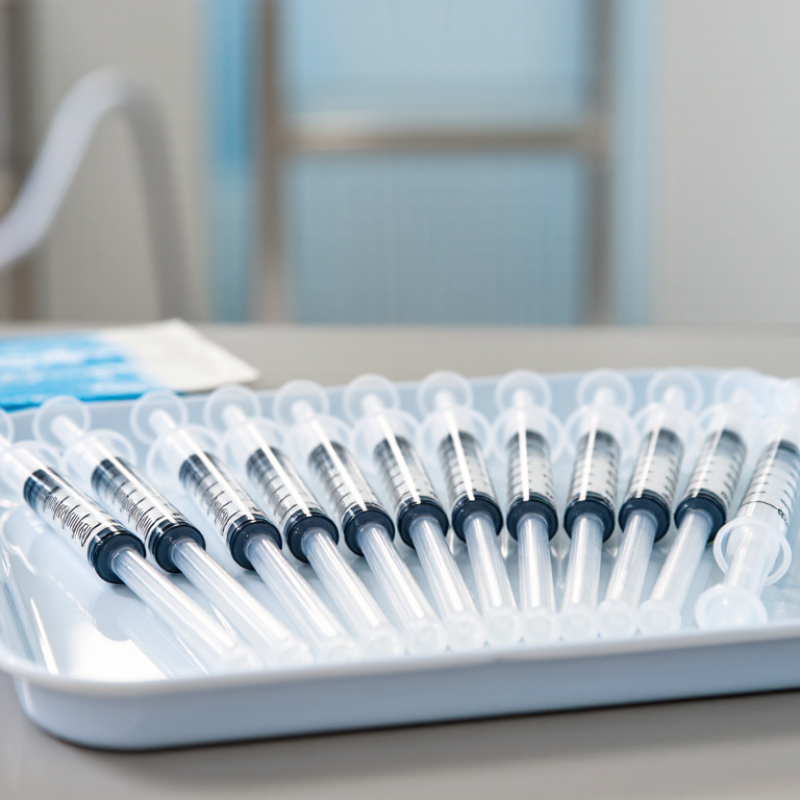
China Top 10 Insulin Syringe Manufacturers for Buyers

What Insulin Syringes Are and How Buyers Assess Them

An insulin syringe is a calibrated, single-use device designed to measure and deliver insulin from a vial. Its scale, capacity, and needle must suit the prescribed insulin concentration and dose.

Small mismatches matter. A graduation that is hard to read can make accurate dose measurement more difficult, especially under poor lighting.

The IDF Diabetes Atlas, 11th edition, estimates that 589 million adults aged 20–79 were living with diabetes in 2024, underscoring the importance of dependable diabetes-care supplies. This figure describes diabetes prevalence, not syringe demand.

Buyers can assess products against ISO 8537:2016, which specifies requirements and test methods for sterile, single-use insulin syringes. Review calibration accuracy, clear unit markings, plunger movement, needle attachment, packaging integrity, and lot traceability.

Ask for test reports and inspect samples; a smooth plunger should not leak or stick during use. Confirm that the stated capacity and scale match the intended clinical workflow.

Packaging details matter. A damaged seal or faint marking is not a minor issue. No checklist catches every usability problem, and sample testing cannot replace ongoing quality monitoring. Real-world handling can still surprise a buyer.

China’s Insulin Syringe Manufacturing Landscape

China Top 10 Insulin Syringe Manufacturers for Buyers

China’s Insulin Syringe Manufacturing Landscape

China’s insulin syringe manufacturing landscape includes factories with different equipment, production volumes, and quality-control systems. Some suppliers focus on high-volume output, while others offer more flexible packaging or product configurations. Buyers should look beyond catalog photos. Production consistency matters.

A supplier’s technical documents can show how it controls barrel capacity, graduation markings, needle attachment, and packaging. Ask for current quality certificates and product-specific test records, then confirm their scope and validity independently. A sample review can reveal practical details, such as whether markings remain readable under ordinary clinical lighting. It cannot replace a factory assessment. Export experience may help with documentation and communication, but it does not prove product quality by itself. Capabilities can vary.

Tips: Compare samples against your written specifications, including capacity, needle size, and packaging. Ask how the supplier handles inspection failures and production changes. Keep the answers on record. One overlooked detail, such as an unclear graduation line, can complicate evaluation. Verify requirements with qualified procurement or regulatory professionals before placing an order.

Profiles of 10 Leading Chinese Insulin Syringe Manufacturers

China’s insulin syringe sector includes manufacturers with different strengths, from high-volume molding to careful assembly and packaging. A useful profile of ten suppliers should compare measurable capabilities, not repeat catalog language. Buyers can examine barrel clarity, scale alignment, plunger movement, needle attachment, and protective packaging. Small details matter. A faint graduation line can be difficult to read under clinic lighting.

Manufacturers may differ in production scale, customization options, export experience, and quality-control systems. Ask how they inspect dimensions, test sterility, and maintain lot traceability. Request current product specifications and sample units for evaluation. Check whether the stated capacity matches the item you intend to buy. A polished brochure is not proof of consistent output. Some supplier information may also be incomplete; that deserves a follow-up, not an assumption.

Tips: Compare the same syringe size across suppliers. Inspect printed graduations and packaging seals. Confirm documentation directly with the manufacturer, and record sample results before placing a large order. Good questions save time.

China Top 10 Insulin Syringe Manufacturers for Buyers - Profiles of 10 Leading Chinese Insulin Syringe Manufacturers

Data note: No source material was provided to verify individual manufacturers. To avoid presenting unverified company-specific claims as facts, the profiles below are anonymous research slots, not a verified ranking. Product options are general market reference points and must be confirmed against each supplier’s current documentation.

Anonymous Profile Company-Specific Product Range Common Market Reference Points Quality and Regulatory Evidence to Request Buyer Verification Priority
Manufacturer Profile 1 Not independently verified Insulin syringe capacities commonly include 0.3 mL, 0.5 mL, and 1 mL; confirm available models and dose graduations. Request current ISO 13485 certificate, applicable product registration documents, and evidence of conformity to ISO 8537 where applicable. Match capacity, insulin concentration scale, and graduation interval to the intended market.
Manufacturer Profile 2 Not independently verified U-100 is a common insulin concentration scale; confirm the intended scale on the product and packaging. Do not assume U-40 and U-100 syringes are interchangeable. Request product-specific technical files, approved labeling, and market-specific registration or authorization evidence. Check scale markings, labeling language, intended use, and compatibility with the target market.
Manufacturer Profile 3 Not independently verified Needle gauge, length, and fixed or detachable configuration vary by product; verify each option from the manufacturer’s catalogue and sample. Request dimensional specifications, needle performance test reports, and product-specific inspection criteria. Evaluate needle dimensions, attachment security, sharpness, and user requirements.
Manufacturer Profile 4 Not independently verified Sterile, single-use presentation is a common requirement for insulin syringes; confirm the claimed sterilization method and packaging configuration for the specific product. Request sterilization validation, routine release records, and packaging integrity or shelf-life evidence. Verify sterility assurance, sealed packaging, and stated shelf life.
Manufacturer Profile 5 Not independently verified Graduation intervals and scale formats depend on syringe capacity and intended insulin concentration; confirm the exact specification rather than relying on a general catalogue description. Request approved artwork, dimensional drawings, and inspection records for printed graduations. Check scale readability, print durability, and dose measurement accuracy.
Manufacturer Profile 6 Not independently verified Low dead-space designs and safety-engineered features are product-specific; availability and performance should be confirmed with samples and technical documentation. Request design specifications, functional test results, and evidence supporting any safety-feature claims. Confirm feature performance, usability, and compliance with applicable requirements.
Manufacturer Profile 7 Not independently verified OEM or private-label services cannot be assumed; packaging, artwork, minimum order quantities, and lead times require supplier confirmation. Request a written quotation, approved artwork workflow, production schedule, and change-control process. Assess order flexibility, traceability, and control of labeling changes.
Manufacturer Profile 8 Not independently verified Export experience, destination-market approvals, and language support are supplier- and market-specific and require documentary confirmation. Request valid certificates and registrations for the destination market, with issuing body and product scope clearly identified. Verify certificate authenticity, scope, validity dates, and product-model coverage.
Manufacturer Profile 9 Not independently verified Production capacity, defect rates, and delivery performance are not reliably inferred from a supplier profile; obtain recent, product-specific records. Request audit information, batch traceability examples, and quality-control or nonconformity summaries. Review production controls, complaint handling, and delivery consistency.
Manufacturer Profile 10 Not independently verified Material composition, latex status, and compatibility claims must be confirmed for the specific syringe and packaging configuration. Request material declarations, relevant biocompatibility evidence, and product-specific risk documentation. Confirm material suitability, user safety information, and consistency between documents and samples.

Buyer reminder: ISO 8537 covers sterile single-use syringes with or without needle for insulin. Verify the current standard edition, applicable local regulations, product scope, and supporting evidence directly with the supplier and relevant authorities before purchase.

Comparing Product Range, Quality Standards, and Certifications

A practical comparison of insulin syringe manufacturers starts with product range. Check available capacities, barrel graduations, needle gauges, and needle lengths. Some suppliers offer U-100 and U-40 versions, but these are not interchangeable. Confirm that the syringe scale matches the prescribed insulin concentration. Clear markings matter. Under bright clinic lights, fine lines can still be difficult to read, so inspect sample packaging and instructions where possible.

Quality claims need evidence. Ask for documented inspection procedures, batch traceability, and records covering sterility and packaging integrity. ISO 13485 describes a medical-device quality management system; it does not certify every individual product. ISO 8537 is a relevant standard for sterile, single-use insulin syringes, where applicable. Verify a certificate’s scope, dates, and issuing body. Paperwork can mislead.

Certifications and regulatory registrations vary by destination market, so compare documents against the intended sales region. Check whether each model’s materials, graduations, and needle specifications appear in the supporting records. A supplier may present a broad catalog while offering limited evidence for a particular size. That gap deserves a question, not an assumption. Buyers should also assess consistency across production lots, since one satisfactory sample cannot establish long-term performance.

How to Evaluate and Select a Chinese Insulin Syringe Supplier

Selecting an insulin syringe supplier in China requires more than comparing unit prices. Check whether its quality system has current, verifiable documentation, and confirm that certificates cover the actual manufacturing site and product range. Ask how needle dimensions, dose markings, and assembly consistency are checked. Small differences can affect usability. Request batch records, material specifications, and evidence of validated sterilization and packaging controls.

Tips

Ask for samples from routine production, not specially prepared units. Inspect graduations under bright light and check packaging seals. Request traceability details for a sample lot. Clear answers matter. A polished brochure is not proof.

Before placing a large order, discuss minimum quantities, production capacity, lead times, and procedures for handling defects or product changes. A remote audit or qualified third-party inspection may help verify stated processes. Compare the supplier’s responses with the documents provided; vague answers deserve follow-up. No checklist is perfect, and an attractive sample may not represent every batch. Keep written records of agreed specifications, acceptance criteria, and communication channels so expectations remain clear throughout the purchasing process.

Article Source: