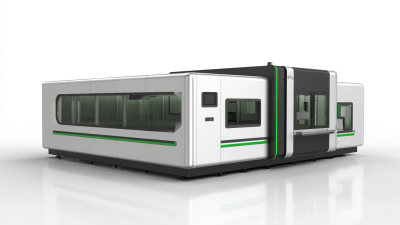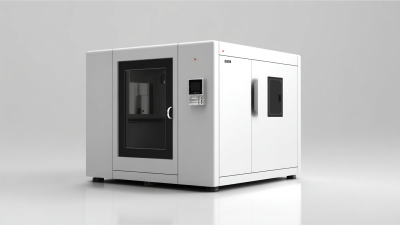
A Fiber Laser Enclosure is more than a metal cabinet around a laser source. It helps contain hazardous radiation, control access, and protect nearby workers and equipment. Yet the enclosure must also support practical production needs. Operators need clear sightlines, reachable controls, and doors that allow routine maintenance without awkward workarounds. Small design choices matter. A poorly placed window can limit visibility. A cramped service opening can slow repairs.
For a useful manufacturing perspective, quality expert W. Edwards Deming’s principle applies: “Quality is everyone’s responsibility.” It is not a fiber-laser-specific statement, but it highlights an important point: enclosure performance depends on coordinated design, fabrication, assembly, and inspection. Buyers comparing China Top Fiber Laser Enclosure Manufacturers should ask how suppliers verify materials, joints, interlocks, viewing panels, and fit with the intended laser system. Request drawings and test records where available. Check how the supplier handles revisions, spare parts, and after-sales support.
Details deserve questions. A polished finish alone proves little. Ask how the enclosure is matched to the laser’s wavelength, power, operating mode, and work area. Confirm that safety features suit the actual application and are reviewed by qualified personnel. No catalog description can replace that review. This guide explores manufacturer capabilities, selection criteria, and practical checks for buyers. It also recognizes a limitation: published specifications may not reveal how a product performs during daily service. That gap is worth investigating before a purchase.
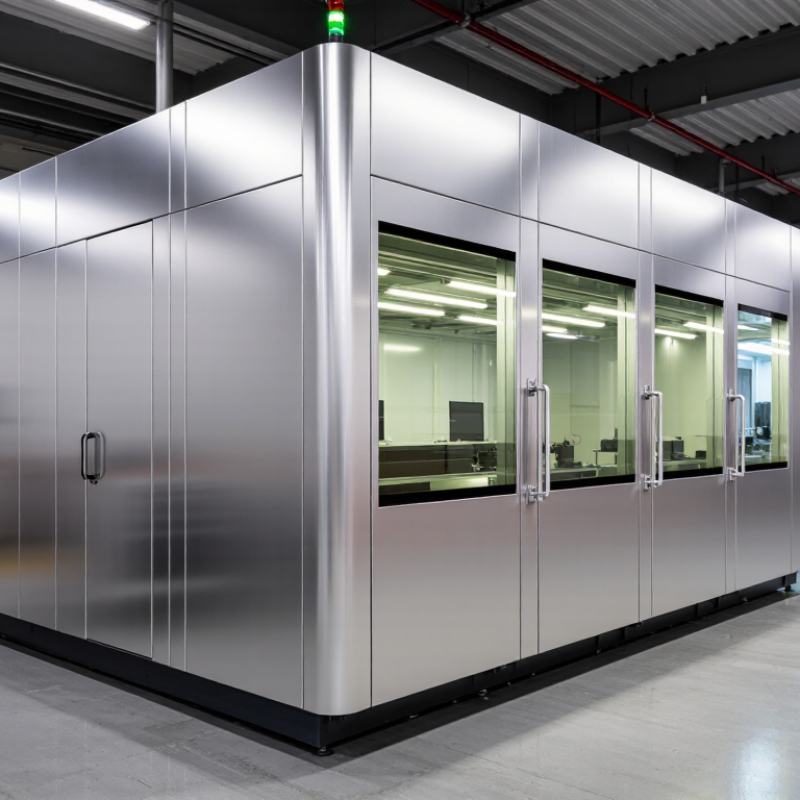
Fiber laser enclosures contain hazardous beam paths and reduce exposure to direct or reflected light during operation. Many industrial fiber lasers emit near-infrared energy around 1.06–1.08 μm. The beam is invisible. Operators cannot judge its presence by looking at the work area, so a closed, well-fitted enclosure matters.
At this wavelength, enclosure design must account for more than the laser’s rated output. Panels, seams, access doors, cable openings, and viewing windows all affect containment. A window should be selected for the relevant wavelength and operating conditions, not simply because it appears dark. Interlocks can stop emission when a door opens, while extraction manages process fumes and heat. Small gaps deserve attention.
Manufacturers should verify enclosure performance through documented testing and careful inspection of joints and access points. In practice, equipment layout changes, and a cable port that was safe on paper may become a weak point after installation. That is easy to overlook. A sound enclosure balances access, cooling, visibility, and containment; no single panel thickness makes every design safe. A practical review of the complete system is essential.
Industrial laser enclosures are working safety components, not decorative sheet-metal covers. They help restrict access, contain laser radiation, and direct fumes toward extraction points. Grand View Research’s Laser Processing Market report valued the global market at USD 19.1 billion in 2023 and projected 9.7% annual growth from 2024 to 2030. That expansion makes service access and enclosure durability increasingly important. This is easy to overlook. Common designs include fully enclosed cabinets, modular panel systems, and guards integrated into production lines. Cabinet systems suit compact cells; modular panels allow easier changes when equipment layouts shift.
Powder-coated steel offers rigidity and impact resistance, while aluminum can reduce panel weight. Viewing windows need a wavelength-specific rating; ordinary tinted acrylic is not a substitute. Seams, cable ports, and doors also need careful treatment, since small gaps can undermine an otherwise sturdy enclosure. ISO 11553-1 addresses safety requirements for laser processing machines, and IEC 60825-1 covers laser product safety. Designers should consider both alongside extraction, cooling, and maintenance needs. A practical test is whether a technician can inspect filters without reaching across the work zone. Some enclosures are still overbuilt for the process, making routine servicing awkward. That trade-off deserves another look.
Approximate thermal conductivity at 20–25°C, in watts per meter-kelvin (W/m·K). Aluminum transfers heat more readily than steel, while stainless steel has lower conductivity. Actual values vary by alloy, temper, and product form; material selection for a laser enclosure must also account for structural requirements and laser-safety standards.
For fiber laser enclosure manufacturers, safety begins with controlling the beam, not just enclosing the machine. IEC 60825-1 identifies Class 4 accessible emissions as capable of causing severe eye and skin injury, including from reflected beams, and creating fire risks. The U.S. Food and Drug Administration’s Laser Products and Instruments guidance describes visible continuous-wave lasers above 0.5 W as Class IV; IEC classification depends on wavelength and exposure conditions, so that figure is not a universal cutoff. A small gap near a viewing window can matter.
Good enclosure design combines opaque panels, protected viewing windows, and interlocks that stop emission when an access door opens. Interlocks should be tested after installation and maintenance, with faults preventing operation where practicable. Add clear emission indicators and secure beam paths. A sturdy door is not enough. Panels can shift during service, and reflections from a metal workpiece may escape an overlooked opening.
Tips: Check door alignment and interlock response during routine inspections. Keep service access controlled, and document each test. A checklist helps, but it can miss a poorly seated panel; inspect the enclosure itself.
China’s fiber laser enclosure manufacturers supply complete cabins, machine covers, and modular safety housings for cutting and marking systems. Typical builds combine welded steel panels, interlocked access doors, viewing windows selected for the laser wavelength, and ports for fume extraction. Some suppliers also provide layout design, sheet-metal fabrication, coating, assembly, and custom openings for cables or ducts. Fit matters. A poorly sealed cable entry can undermine an otherwise solid enclosure. Buyers should request drawings, material specifications, and inspection records, not just polished product photos.
The market context is expanding: MarketsandMarkets’ 2023 Laser Processing Market report projected growth from US$20.2 billion in 2023 to US$29.5 billion by 2028. This figure covers laser processing broadly, not enclosures alone, but it helps explain demand for production-ready machine systems.
Capable manufacturers can tailor panel dimensions, service access, ventilation paths, and window placement to a machine’s workflow. They may also support prototype builds and repeat production.
Not glamorous. Yet details matter: a technician should reach routine service points without awkwardly removing heavy panels. Enclosure performance still needs application-specific validation; a catalogue claim cannot replace suitable testing.
China’s fiber laser enclosure manufacturers should be compared by more than the maximum power listed on a product sheet. A higher rating may require stronger panels, better heat management, and a larger extraction system. Check whether the stated capacity matches your laser’s output, work area, and expected operating hours. Numbers can look reassuring, but the details matter.
Safety features deserve close inspection. Ask how the enclosure limits access during operation, and confirm that doors, interlocks, and viewing windows are suitable for the intended laser setup. Look for clear documentation on panel construction and routine inspection. A window that appears intact is not necessarily the right specification. Small gaps around doors also deserve attention. These checks are easy to overlook.
Service support can determine how quickly a production line recovers from a fault. Compare response times, spare-part availability, installation guidance, and the clarity of maintenance instructions. Ask whether technicians can help verify alignment and extraction performance after setup. A polished brochure is not the same as practical support. It is worth asking for a sample service process, though some answers may remain vague. Record what is confirmed, and what still needs checking.
| Anonymous Manufacturer Profile | Typical Laser Power Range | Enclosure and Safety Features to Check | Service Support to Confirm | Best Fit |
|---|---|---|---|---|
| Profile A — Standard Enclosure Specialist | Approximately 1–3 kW fiber laser systems | Fully enclosed cutting area; interlocked access doors; wavelength-rated viewing window; provision for fume extraction. | Remote troubleshooting and spare-parts support; confirm technician availability and response times for the installation location. | General sheet-metal work and buyers prioritizing a standard enclosed configuration. |
| Profile B — Mid-Power Production Supplier | Approximately 3–6 kW fiber laser systems | Enclosure designed for the specified machine and laser source; door interlocks; protected viewing panels; extraction connections and safety labels. | Ask about commissioning, operator training, preventive maintenance, and the availability of commonly needed replacement parts. | Regular production where throughput and service planning are important. |
| Profile C — High-Power Enclosure Integrator | Approximately 6–12 kW fiber laser systems | Heavy-duty, machine-matched enclosure; interlocked access points; appropriately rated laser viewing protection; extraction sized for the process. | Confirm on-site installation support, maintenance coverage, escalation procedures, and support for the specific laser source and control system. | High-volume cutting and applications that require a carefully engineered machine enclosure. |
| Profile D — Custom Automation Builder | Power rating specified for the integrated system; confirm the supported range for each model. | Custom enclosure layout; interlocks coordinated with the machine controls; guarded loading or automation openings; application-specific extraction and viewing protection. | Review project engineering, integration testing, documentation, training, and ongoing software or controls support. | Automated lines, special layouts, or installations with non-standard material handling. |
| Profile E — Value-Focused Equipment Supplier | Commonly configured for entry- to mid-range systems; verify the exact power rating by model. | Check that enclosure coverage, access-door interlocks, viewing-window rating, and extraction provisions are specified in the quotation. | Request written warranty terms, parts lead times, remote-support hours, and details of local service arrangements. | Cost-conscious buyers comparing standard configurations and total ownership costs. |
| Comparison note: These are anonymous, representative supplier profiles—not verified specifications or rankings of particular companies. Power ranges and feature availability vary by machine model and configuration. Before purchase, request model-specific documentation and confirm that the complete installation meets applicable laser-safety requirements; enclosure design, interlocks, and viewing protection should be assessed for the actual laser source and application. | ||||