
Lighting schedules shape energy use in homes, offices, and commercial buildings. The U.S. Department of Energy estimates that lighting accounts for about 15% of an average home’s electricity use. A well-chosen Timer Switch For Lights can help prevent lamps from staying on in empty rooms or hallways. Small change. Real impact.
The International Energy Agency frames energy efficiency as a practical part of meeting growing energy needs. Its Executive Director, Fatih Birol, has described efficiency as “the first fuel.” Timer switches make that idea tangible: a corridor light can turn off after closing time, while a porch lamp follows a set evening schedule. These devices vary widely, from simple countdown timers to programmable models with multiple daily settings. Buyers also need to consider load ratings, wiring compatibility, and ease of setup.
This guide examines ten Timer Switch For Lights manufacturers in China, focusing on product range, technical capabilities, and manufacturing credibility. Those details matter more than polished catalog photos. A timer can be reliable on paper yet awkward to program in a real building. Settings may also need adjustment when routines change. No single model fits every project. The comparisons ahead aim to give buyers a grounded starting point, while recognizing that supplier claims should be checked against product documentation and samples.
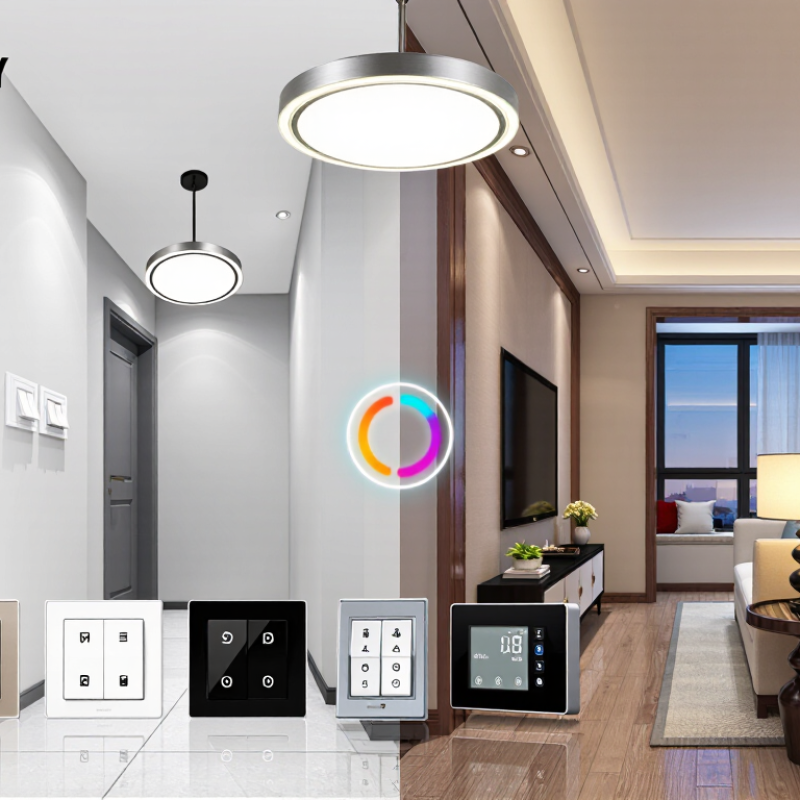
A timer switch for lights is a control that turns a connected lighting circuit on or off at preset times. A basic model follows a daily schedule; some electronic models allow different settings for weekdays and weekends. Inside, a clock or programmed controller signals a relay, which opens or closes the circuit. The light then switches without someone pressing its wall control. Simple, but useful.
For example, a hallway light might turn on at 6 p.m. and off at midnight. Some models also offer countdown or sunrise-and-sunset settings. A timer does not detect whether anyone is in the room. A fixed schedule can waste energy when routines change or daylight lasts longer than expected. Real rooms are messier. Check that the switch is rated for the connected lighting load, and follow the product’s installation instructions.
The U.S. Department of Energy’s 2017 report, Energy Savings from Networked Lighting Controls in Commercial Buildings, reported average lighting-energy savings of 47% across evaluated projects. That figure covers broader networked controls, not timer switches alone. It shows the potential of well-matched lighting controls, but it should not be treated as a guaranteed result for a timer. A practical schedule, suitable equipment, and occasional review matter.
China’s timer switch manufacturing sector sits within a broad electrical and equipment-making ecosystem. The National Bureau of Statistics reported that China’s equipment manufacturing value added grew 7.7% in 2024. This figure describes the wider sector, not timer-switch output. That distinction matters.
Factories produce switches for corridor lighting, stairwells, gardens, and other scheduled applications. Typical product checks include timing accuracy, relay endurance, terminal security, and performance under changing temperatures. Small details matter: a loose screw terminal or unclear dial can undermine an otherwise sound unit. Export buyers should compare rated load, switching type, enclosure protection, and test documentation—not price alone. Quality varies.
Energy efficiency is also shaping demand. The International Energy Agency’s 2023 buildings analysis estimates that buildings account for about 30% of global final energy consumption and 26% of energy-related emissions. Timer switches can reduce unnecessary operating hours, but results depend on installation and settings. A timer cannot compensate for poor lighting design. Publicly available figures rarely isolate China-made timer switches, so broad market statistics should not be mistaken for product-specific growth data.
When assessing Chinese timer-switch manufacturers, request the test report for the exact model, not a similar product. The IEA’s Energy Efficiency 2023 report estimates that buildings account for about 30% of global final energy consumption, making reliable lighting control a practical efficiency concern.
Check switching accuracy, power-loss memory, and compatibility with LED loads, whose startup current can stress contacts. Ask for relay endurance results under a stated load.
Small details matter. A clear test method is more useful than a large cycle-count claim.
Review factory traceability, component controls, and inspection records, then compare them with a production sample. Confirm that safety testing applies to the intended market and product configuration; IEC 60669-2-3 is a relevant reference for time-delay switches in fixed household installations.
Ask how the supplier handles failed samples and production changes.
Request evidence, not promises. An audit certificate alone cannot prove each batch performs consistently, and paperwork may be incomplete. That is a real limitation.
Before ordering, test several units with the actual lamp type, wiring setup, and switching schedule, and record any timing drift or contact noise.
China’s timer-switch manufacturers serve residential, commercial, and industrial lighting projects. This profile of ten suppliers focuses on practical differences: product range, control functions, and manufacturing evidence. Some specialize in compact wall-mounted units; others offer DIN-rail models for distribution cabinets. Weekly programming, countdown settings, and astronomical switching are common functions. Details matter. Buyers should check rated voltage, relay load, switching accuracy, and terminal design against the intended installation.
The International Energy Agency’s 2023 Buildings report estimates that buildings account for about 30% of global final energy consumption and 26% of energy-related emissions. Timer switches cannot solve this alone, but scheduled lighting can reduce unnecessary operating hours when configured well. For each manufacturer, useful evidence includes test procedures, quality-control records, and clear product specifications. Ask for sample units and verify switching performance under the expected load. Catalogs rarely reveal field failure rates. That gap deserves attention. A polished product page is not proof of long-term reliability, and buyers may need to compare documentation with actual sample testing.
Illustrative timer-switch operation: the light is scheduled to turn on from 06:00–08:00 and 18:00–23:00. This example explains a common use case and does not represent measured data or compare individual manufacturers.
Lighting timer switches help automate lights in corridors, stairwells, storefronts, gardens, and shared building areas. In a hallway, a timer can turn lights off after a set period, reducing the chance they stay on all night. Outdoor schedules can follow opening hours or seasonal daylight changes. Small details matter. A schedule that works in a shop may feel inconvenient in a home, where routines change from day to day.
Choosing a switch starts with the lighting load and installation conditions. Check the rated voltage and current, and confirm compatibility with LED drivers or other electronic loads. Some lamps draw a brief surge when switched on, so the printed wattage alone may not tell the whole story. Also consider whether the location is damp, exposed to weather, or subject to frequent switching. For hardwired installations, have a qualified electrician verify the wiring and enclosure requirements.
The control method should fit the users. A weekly program suits regular business hours; a countdown timer is often simpler for a storage room or stairwell. Look for a clear display, easy schedule changes, and a manual override. Battery backup can preserve settings during an outage, though backup duration varies by model. One detail is easy to miss: users may forget how to adjust the clock after a power cut. Test the schedule with the actual lamps installed, because real-world behavior can differ from a neat specification sheet.