Why Choose Double-Ended Dowel Pin for Your Projects?
When embarking on projects requiring precision, choosing the right hardware is crucial. The Double-Ended Dowel Pin stands out for its versatility and ease of use. This type of pin often features a smooth finish, making it suitable for various applications. Crafted typically from durable materials, it provides a strong fastening solution that enhances stability.
Many professionals appreciate the Double-Ended Dowel Pin for its unique design. Its double-ended feature simplifies alignment and assembly processes. This design can reduce errors during construction or woodworking. However, like any product, it is essential to consider its limitations. Not every project will benefit from dowel pins. Understanding when to use them requires thought and experience.
Incorporating the Double-Ended Dowel Pin into projects can significantly improve outcomes. However, care must be taken in selecting the correct size and material. This choice affects both performance and durability. Reflecting on past experiences with dowel pins can also lead to better decisions in the future. Balancing advantages and potential downsides is key to successful project completion.
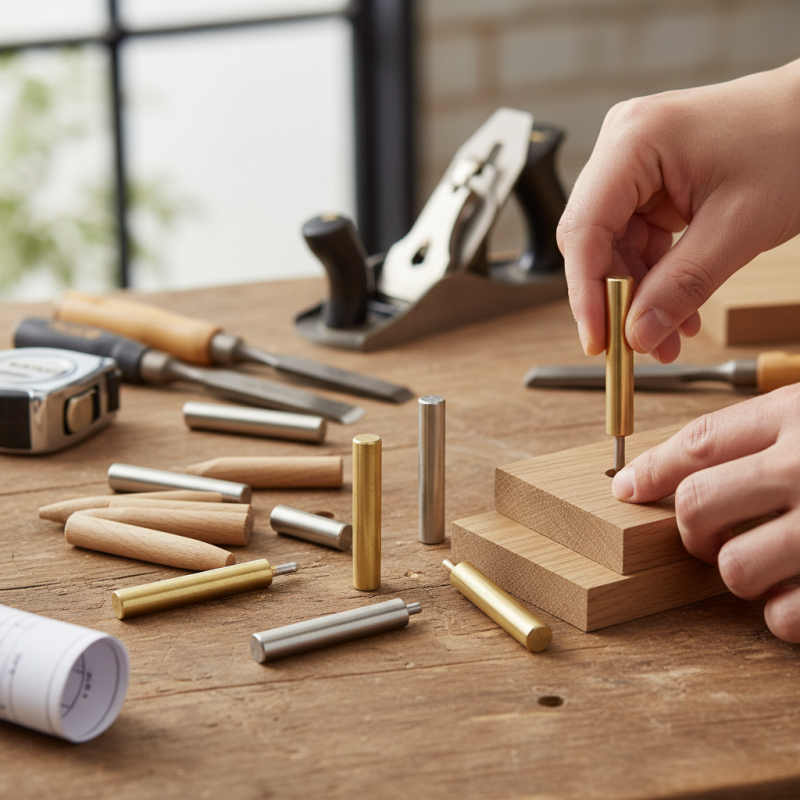
Benefits of Using Double-Ended Dowel Pins in Manufacturing Processes
Double-ended dowel pins are indispensable in many manufacturing processes. They offer a streamlined way to align and secure components together. This unique design provides strength and stability by allowing for insertion from both ends. Precision is critical in engineering. Double-ended dowel pins ensure that parts fit tightly, minimizing the chance of movement or misalignment.
Using double-ended dowel pins can also enhance the efficiency of assembly. They simplify tasks by reducing the number of required fasteners. This makes installation faster and less complicated. Moreover, these pins can be reused. They save costs over time. However, it is vital to ensure that materials are appropriate for the intended application.
Despite their advantages, challenges may arise. Incorrect placement can lead to weak joints. Quality control is necessary to ensure uniformity. Over time, wear and tear can affect performance. Regular inspection is an essential practice. Emphasizing the quality of these pins can significantly impact the overall durability of the project. Overall, the choice of double-ended dowel pins can lead to improved outcomes in various manufacturing settings.
Why Choose Double-Ended Dowel Pin for Your Projects? - Benefits of Using Double-Ended Dowel Pins in Manufacturing Processes
| Feature | Description | Advantages |
| Precision Alignment | Double-ended dowel pins provide accurate alignment between components in assemblies. | Enhances overall assembly precision and reduces fitment issues. |
| Ease of Assembly | Double-ended design allows for quicker and easier installation processes. | Saves time during assembly, improving production efficiency. |
| Durability | Made from robust materials to withstand operational stresses. | Longer lifespan, reducing replacement frequency and costs. |
| Versatility | Can be used in a variety of applications across different industries. | Adapts to various manufacturing needs, providing design flexibility. |
| Cost-Effectiveness | Affordable compared to other fastening options in bulk. | Reduces overall manufacturing costs without compromising quality. |
Comparative Analysis: Double-Ended Dowel Pins vs. Standard Dowel Pins
When comparing double-ended dowel pins to standard dowel pins, several factors come into play. Double-ended dowel pins have threads on both ends, which facilitates fastening in different directions. This design allows for easier alignment and secure connections. Standard dowel pins, however, are often limited to one direction, which can necessitate additional hardware.
The versatility of double-ended dowel pins can be beneficial in complex projects requiring precise alignment. They provide additional gripping power when both ends are secured. This makes them especially useful in furniture assembly and cabinetry. However, they may not always fit every application seamlessly. In some cases, their protruding ends might complicate designs or interfere with aesthetics.
Choosing between these types often depends on specific project requirements. Double-ended dowel pins can enhance functionality and simplify assembly. Yet, their unique features might not be necessary for simpler applications. Therefore, careful consideration is essential to ensure you select the correct pin type for your needs.
Industry Applications: Where Double-Ended Dowel Pins Excel
Double-ended dowel pins are versatile components in various industries. They are commonly used in woodworking, furniture assembly, and metal fabrication. Their dual-ended design allows for precise alignment, making them ideal for joinery tasks. In high-stress applications, they provide exceptional strength and stability.
These pins excel in furniture manufacturing. They ensure robust connections between parts. When assembling cabinets or tables, double-ended dowel pins simplify the process. They reduce the need for complicated fasteners. This not only saves time but also enhances aesthetics.
**Tip:** Always drill pilot holes before inserting dowel pins. This prevents splitting and ensures a snug fit.
In the automotive industry, double-ended dowel pins align components in engines and frames. Their durability withstands vibrations and heavy loads. Manufacturers rely on these pins for accurate assembly of critical parts. In construction, they secure structural elements, providing lasting support.
**Tip:** Consider using dowel pins with a tight tolerance. This minimizes play and maximizes structural integrity.
Choosing the right dowel pin can impact project outcomes. Precision and material quality matter. When planning your next project, assess your needs carefully. A well-chosen dowel pin may be the difference between a strong build and a weak one.
Why Choose Double-Ended Dowel Pin for Your Projects?
Material Choices and Strength Ratings for Double-Ended Dowel Pins
When selecting materials for double-ended dowel pins, understanding the strength ratings is crucial. These pins are often made from steel, stainless steel, or plastic. Steel offers high tensile strength and durability. According to industry data, steel dowel pins can handle loads up to 150,000 psi. However, the corrosion potential in certain environments means stainless steel is sometimes preferred. Stainless steel dowel pins can resist rust but may not support as much weight.
(Image Placeholder) Plastic dowel pins are lighter and resistant to certain chemicals. Their strength ratings typically range from 10,000 to 30,000 psi. In applications where weight is a concern, plastic may be an ideal choice. Nonetheless, they lack the structural integrity of metal alternatives. It's important to weigh the application's specific needs against these properties.
Manufacturers often miscalculate the required strength for their projects, leading to failures. Testing the actual load-bearing capacity before implementation is essential. Understanding your project requirements will guide you toward the right choice between materials. The trade-offs between weight, strength, and environment must be adequately addressed to optimize the performance of double-ended dowel pins.
Cost Efficiency and Longevity of Double-Ended Dowel Pins in Projects
Double-ended dowel pins are becoming a preferred choice in various projects. Their design features two ends, allowing for straightforward assembly and robust connections. This dual functionality often leads to enhanced durability and improved load distribution.
Cost efficiency is a critical factor. The manufacturing process for double-ended dowel pins is typically streamlined, resulting in lower costs compared to other fastening options. According to industry reports, using these pins can save around 15% in material costs over time. Additionally, their longevity contributes to reduced maintenance expenses. Many builders report that projects utilizing double-ended dowel pins last longer, minimizing the need for replacements.
Tips: Always consider the application and load requirements. A miscalculation can lead to project delays. When selecting dowel pins, thickness and material type matter greatly. Consult engineering guidelines to ensure compatibility. In projects where aesthetics matter, consider the visual impact of these pins. Not all double-ended dowel pins suit every design. Be aware of the installation process; improper alignment can weaken the structure.