How to Choose the Right Galvanized Nails for Your Projects?
Choosing the right galvanized nails is crucial for successful projects. Galvanized nails offer excellent resistance to rust and corrosion, making them ideal for outdoor use. According to a report by the Construction Materials Association, over 70% of construction professionals prefer galvanized nails for exterior applications.
Expert John Stevens, a leader in the fasteners industry, emphasizes, "Using the right galvanized nails can significantly extend the lifespan of any construction project." This highlights the importance of proper selection.
However, the vast range of galvanized nails can be overwhelming. Different coatings, sizes, and types exist, each designed for various applications. For instance, hot-dipped galvanized nails are tough but may not always be necessary for light-duty tasks. Understanding these nuances is key to achieving the desired results. Choosing poorly could lead to project failures, increased costs, and wasted time. It's essential to carefully evaluate your needs and consider expert advice in the decision-making process.
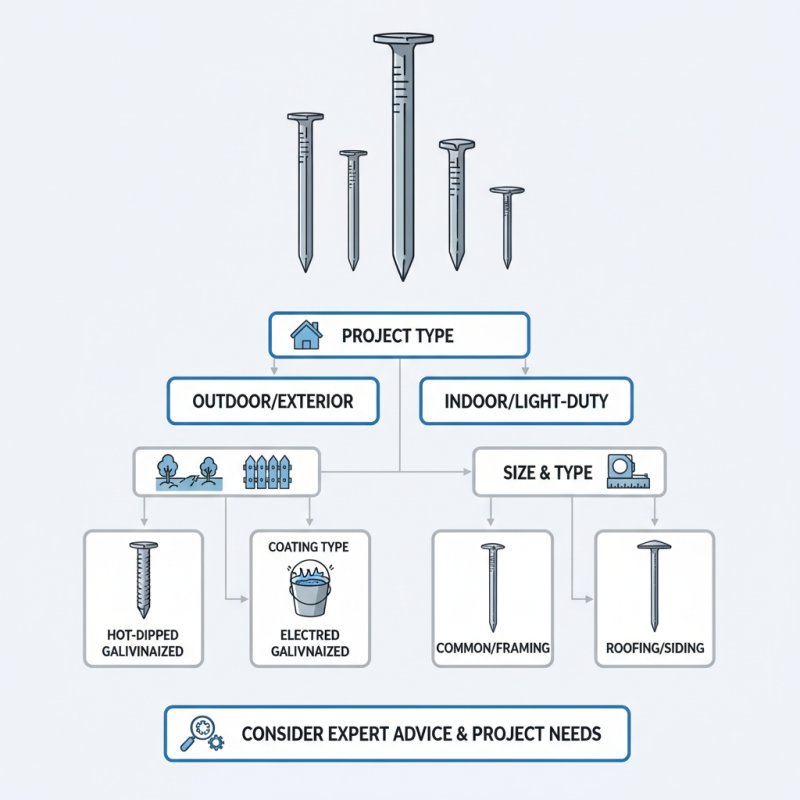
Understanding the Types of Galvanized Nails and Their Uses
When selecting galvanized nails, understanding their types is crucial. There are primarily two types: hot-dipped and electro-galvanized. Hot-dipped nails are coated with a thicker layer of zinc. This makes them more durable and ideal for outdoor projects. They resist corrosion effectively. On the other hand, electro-galvanized nails have a thinner zinc layer. They work well in indoor or dry conditions. Yet, they might not hold up as long in damp environments.
Consider the size and gauge of the nails as well. Larger nails provide stronger holding power. However, they can split the wood if used incorrectly. Smaller nails are easier to handle but might not support heavier materials. Reflecting on your project’s demands is essential. Sometimes, mixing different nail types can yield better results. For instance, combining hot-dipped nails for external structures with electro-galvanized nails for interiors might enhance longevity.
Understanding the specific applications is key. For framing, use thicker gauge nails. For delicate work, smaller options are better. Yet, it’s vital to assess your skill level. If unsure, choosing the wrong type can lead to project failure. Always take time to evaluate your needs before making a decision. This will aid in the successful completion of your project.
How to Choose the Right Galvanized Nails for Your Projects?
This chart illustrates the percentage of various types of galvanized nails used in different applications. Roofing nails and framing nails are among the most commonly used. Understanding these types can help in selecting the right nail for your projects.
Assessing Corrosion Resistance for Outdoor and Indoor Projects
Choosing the right galvanized nails for your projects can make a big difference. Corrosion resistance is key, especially for outdoor projects. Stainless steel nails are often overkill. Galvanized nails work well for many tasks. They come coated with zinc, which helps prevent rust. However, not all galvanized nails are equal.
When selecting nails, consider the environment. For outdoor use, ensure they are hot-dipped galvanized. This gives a thicker coating and better protection. In humid or coastal areas, this is vital. For indoor projects, standard galvanized nails may suffice. Still, moisture levels can vary; assess the specific location.
Pay attention to the intended use. Using nails in decking or roofing? Go for corrosion-resistant options. For fences or garden structures, check the lifespan. Iron nails, even with zinc, can rust quickly in wet areas. Reflect on your choices. Is the nail’s durability aligned with your project's demands? Careful consideration now can save headaches later.
Choosing the Right Nail Size and Length for Your Specific Project
When selecting galvanized nails, size and length are crucial. Consider what materials you'll be working with. For wood projects, choose longer nails for better grip. A nail that's too short may not hold securely. If you're working with pressure-treated lumber, ensure your nails are compatible to prevent corrosion.
For specific applications, think about the thickness of the materials. Use a longer nail if you're joining thick boards. A 2-inch nail might suffice for thinner materials, while thicker combinations will need at least a 3-inch nail. Holding things together is essential. Sometimes, we overlook this detail, and problems arise later.
Experimentation is key. You might find that a different length yields better results. Take the time to test various sizes on scrap material before committing. Reflecting on past projects can guide your choices. Recognizing where a miscalculation occurred is vital for improvement. The right nail can make all the difference in your project's success.
Identifying Proper Nail Coating for Different Environmental Conditions
When selecting galvanized nails, understanding nail coatings is crucial. Different environments demand specific coatings for durability. For instance, hot-dipped galvanized nails have thicker zinc layers. They withstand corrosion better than standard galvanized options. These are ideal for outdoor projects in humid or coastal areas.
In contrast, electro-galvanized nails offer a thinner coat. They are suitable for indoor use or dry conditions. This makes them less ideal for projects exposed to moisture. It’s crucial to consider where your project will take place. Using the wrong type may lead to rust over time. Even minor mistakes can affect structural integrity.
Be mindful of the surroundings. Elements like rain, salt, and humidity can influence nail choices. Test your selected nails in real environments if possible. Sometimes, choices that seem right may not hold up. Observing their performance can help refine future selections.
Evaluating Nail Quality and Manufacturers for Reliable Performance
When selecting galvanized nails, quality matters greatly. You may think all nails are the same, but that’s not true. Different manufacturers offer various grades of galvanization. A reliable nail should resist rust and corrosion, especially in outdoor projects. Look for nails that have a thick, even layer of zinc. This will enhance their durability over time.
Not all suppliers guarantee consistent quality. Some nails may break or bend easily, which can ruin your project. Inspecting nails visually is essential. Look for defects like uneven surfaces or irregular shapes. These flaws can affect performance. Pay attention to reviews and feedback from other users. They often reveal insights about nail reliability that marketing may not show.
Consider the intended use of the nails. Different projects may require different types, like framing or roofing. If you choose the wrong kind, you may face issues later. Sometimes, it’s worth spending more for better quality. However, not everyone can afford the best. Finding a balance is crucial; understand what you need and what you can compromise on. Always lean toward safety and performance over cost.
How to Choose the Right Galvanized Nails for Your Projects?
| Nail Type | Size (inches) | Coating Thickness (microns) | Corrosion Resistance Rating | Best Use |
| Common Nails | 2 | 40 | Moderate | Framing, Woodwork |
| Box Nails | 1.5 | 30 | Good | Light Construction |
| Screw Nails | 3 | 50 | High | Heavy Duty Projects |
| Roofing Nails | 1.75 | 45 | Very High | Roofing Applications |