What is the Sand Molding Process and Its Benefits?
The sand molding process has emerged as a vital method in metal casting. This technique involves creating molds from sand, allowing for detailed and intricate designs. According to Dr. Emily Carter, a renowned expert in casting technologies, “The sand molding process offers unparalleled precision and flexibility.”
Developing a solid understanding of the sand molding process is essential for industries ranging from automotive to aerospace. This method allows manufacturers to produce complex shapes. Yet, it also comes with challenges. Issues like sand quality and mold stability can impact the final product.
Being aware of these factors is crucial for innovation in the industry. The balance between molding quality and production efficiency can be delicate. The sand molding process offers unique possibilities, yet it requires constant reflection and improvement.
Understanding the Sand Molding Process in Metal Casting
The sand molding process is a crucial technique in metal casting. It involves using sand to create molds for metal shapes. The flexibility of sand allows for intricate designs. According to industry reports, about 90% of all metal castings are produced using sand molds. This highlights its importance in manufacturing.
Sand molding offers several advantages. It is cost-effective, as sand is readily available and inexpensive. The process can accommodate a variety of metal types and sizes. However, there are challenges. The quality of the sand significantly affects the final product. Poorly graded sand results in defects, like rough surfaces or weak structures. The personnel must ensure that the sand mixture is tested regularly for optimal performance.
Moreover, the sand mold may need repairs during casting. This can extend production time. Despite these challenges, the benefits are significant. A report by the Casting Industry Foundation indicates that the efficiency of sand molding can lead to reduced waste and improved energy use in operations. This makes it an appealing option for many manufacturers in the metal casting sector.
Key Materials Used in Sand Molding Techniques
In the sand molding process, various materials are crucial for achieving quality results. One primary material is the sand itself, typically silica sand. It is chosen for its fine grain and ability to retain shape when compacted. Additives like clay enhance the sand, improving its cohesion. These additives can also absorb moisture, which is vital for creating a strong mold.
Another essential material is the bonding agent used alongside sand. Organic or chemical binders help the sand grains stick together more effectively. They can offer better strength and durability compared to sand alone. However, finding the right combination requires experimentation and can lead to inconsistencies in the final product.
The choice of additives and binders impacts the molding process. Sometimes, the results may not meet expectations, leading to defects in the casting. Adjusting particle size, moisture content, and binder ratios can be tricky. Each change alters the mold's behavior, which requires careful observation and adjustments. Reflecting on these factors is key to improving sand molding techniques and achieving better outcomes in future projects.
Step-by-Step Guide to the Sand Molding Process
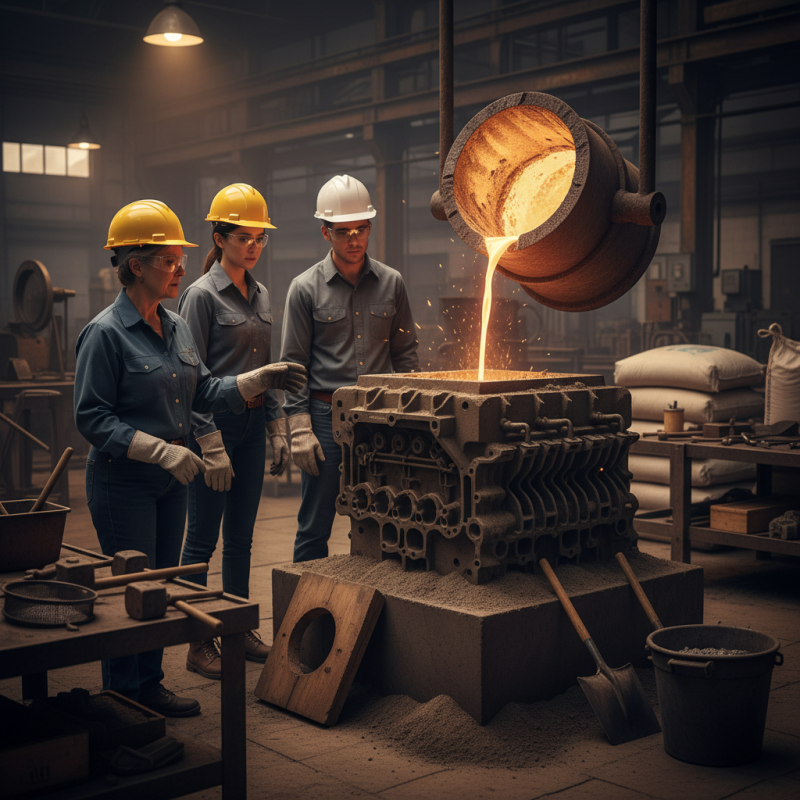
The sand molding process is a widely used method in metal casting. It involves several key steps. First, sand mixed with a binder is shaped into molds. This mixture holds its form well, enabling the casting of intricate designs. Next, the mold is carefully assembled, ensuring all parts fit tightly. This step is critical to reduce imperfections.
After the mold is prepared, molten metal is poured in. Timing is important; if the metal cools too quickly, it can affect the final product. Once cooled, the mold is broken away, revealing the cast piece. This method allows for recycling of sand, minimizing waste. However, achieving the right balance in moisture and binder content can be challenging. Too much binder can lead to brittle molds.
Finally, sand molding can produce high-quality parts, but human error can lead to defects. Attention to detail during each step is essential. Even with experience, mistakes can happen. Reflection on these challenges is crucial for continuous improvement. Embracing imperfections can lead to better results over time.
Benefits of Using Sand Molding in Manufacturing
The sand molding process is a popular technique in manufacturing. It involves creating molds from sand to shape metal castings. This method is known for its efficiency and cost-effectiveness. According to a recent industry report, approximately 70% of metal castings are made using sand casting techniques.
One of the main benefits of sand molding is its versatility. It can easily accommodate complex designs. Different types of metals can be cast, from aluminum to iron. Sand molds can be reused several times, reducing waste. The Environmental Protection Agency estimates that this recycling process can decrease raw material usage by up to 40%. However, this method can sometimes lead to inconsistencies in the final product.
Another important aspect is the speed of production. Sand molding provides a quicker turnaround time compared to other methods. The traditional approach allows manufacturers to produce large quantities in less time. According to a survey, manufacturers noted a reduction in lead times by as much as 30% when adopting sand molding. The downside? The sand can be difficult to clean, and excess material might complicate the finishing process. Overall, while sand molding has many advantages, it’s essential to balance its efficiency with the potential drawbacks.
What is the Sand Molding Process and Its Benefits?
| Dimension | Description |
| Material Used | Silica Sand, Clay, Water |
| Main Benefits | Cost-effective, Versatile, High Detail |
| Applications | Automotive Parts, Machinery Components, Art Castings |
| Molding Techniques | Green Sand Molding, No-Bake Molding |
| Limitations | Surface Finish, Dimensional Tolerances |
| Cooling Time | Varies by thickness (minutes to hours) |
Common Applications and Industries Utilizing Sand Molding
Sand molding is widely used across various industries due to its versatility. It's a process that forms molds from sand mixtures. These molds are essential for metal casting, which is crucial in manufacturing. The automotive and aerospace sectors frequently rely on sand molds. They demand high precision and durability for complex parts.
In addition to automotive and aerospace, sand molding is also significant in construction. It aids in producing architectural components and structural elements. The energy sector benefits as well. Sand molds are vital for creating turbine parts and other energy-efficient components.
However, this process isn’t without challenges. The environmental impact of sand mining raises concerns. Recyclability of sand molds needs to be considered. Innovations are needed to address these issues. The balance between efficiency and sustainability remains a topic for industry discussion.
Sand Molding Process Applications in Various Industries