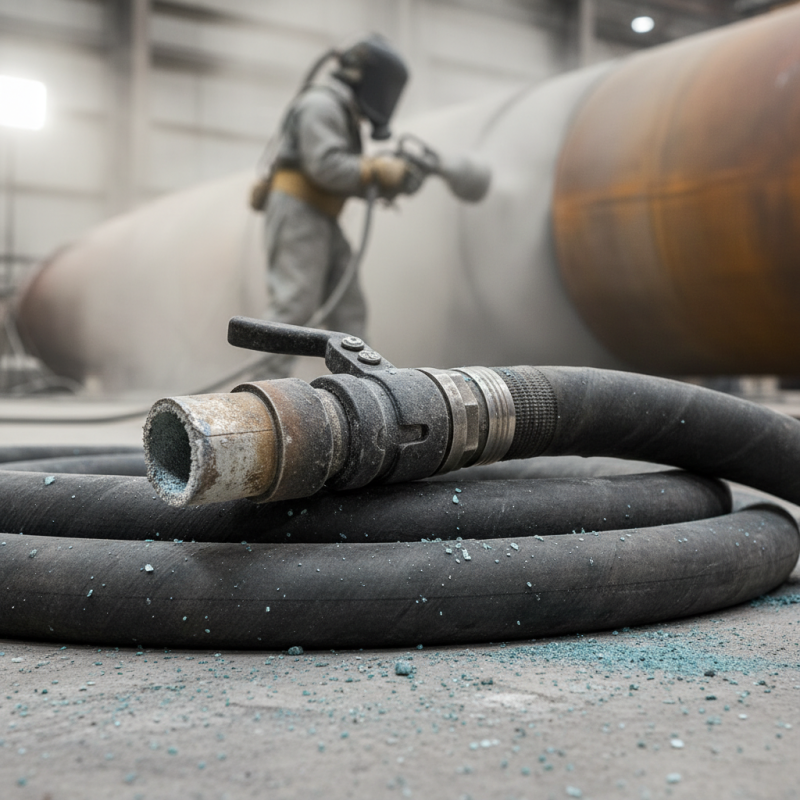
What is a Sandblast Rubber Hose and How is it Used?
A Sandblast rubber hose is an essential tool in various industrial applications, primarily for abrasive blasting. These hoses are crafted to withstand high-pressure environments while delivering a steady stream of abrasive materials. Typically, they are reinforced with durable materials, enhancing their longevity and resilience.
Using a Sandblast rubber hose involves careful consideration. Its construction allows for flexibility during operations, which is crucial in reaching tight spaces. The inner lining is designed to resist wear and tear from abrasive materials. However, improper handling can lead to premature wear. Users must remain vigilant about its condition.
Maintaining a Sandblast rubber hose requires regular inspection. It’s easy to overlook wear indicators, but neglecting them can result in equipment failure. Understanding the limitations of your hose is vital. The right usage ensures efficiency and safety in work environments.
What is a Sandblast Rubber Hose?
A sandblast rubber hose is a specialized type of tubing designed to withstand the harsh conditions of sandblasting operations. These hoses are crafted from durable rubber, enabling them to handle high pressure and abrasive materials. They are essential for transporting sand or other media at high speeds, ensuring efficient surface cleaning and preparation.
In the industrial sector, the demand for sandblast rubber hoses has increased significantly. Reports indicate that the market for these hoses is expected to grow at a rate of 5.3% annually over the next five years. This growth reflects the expanding sandblasting applications in metalworking, construction, and renovation. Users appreciate the flexibility and durability of these hoses, especially when dealing with tough environments.
**Tip 1:** Regular inspection and maintenance of sandblast rubber hoses can prevent wear and prolong their lifespan. Look for cracks or soft spots regularly.
Additionally, while sandblast rubber hoses are designed for heavy-duty tasks, they need careful handling. Improper usage can lead to premature failure. It's crucial to avoid sharp bends or kinks, which may cause internal damage. Ensure that the hose does not rub against rough surfaces during operation.
**Tip 2:** Always comply with the recommended operating pressures. Exceeding these limits can lead to bursts, causing safety hazards. Check the specifications before use.
Composition and Design of Sandblast Rubber Hoses
Sandblast rubber hoses are essential in a range of industrial applications. These hoses are typically made from a blend of synthetic rubber and reinforcing fabrics. The composition is crucial for durability. The layers of materials provide both strength and flexibility. This design allows the hose to withstand the abrasive impact of sandblasting materials. According to industry reports, the typical lifespan of these hoses is around 1,000 hours of use under standard operating conditions.
The design often features a smooth inner surface. This reduces friction and enhances material flow. The outer layer is made for resistance against heat and abrasion. Many sandblast hoses are rated for high pressures, often exceeding 150 psi. Proper design is critical. If the hose fails, it can lead to accidents. Industry data indicate that 30% of hose failures are due to poor maintenance or damage. Regular checks and timely replacements can prevent these issues. Workers must stay vigilant to ensure safety.
Different industries require various specifications for sandblast hoses. Some applications involve more extreme conditions than others. Not all hoses can tolerate high temperatures or heavy abrasives. Choosing the right materials and design is crucial for operational efficiency. Misjudgments in selection can lead to productivity losses. It’s important for professionals to emphasize thorough research before selecting a hose. Understanding the composition and design intricacies is vital for optimal performance.
Common Applications of Sandblast Rubber Hoses
Sandblast rubber hoses play a crucial role in various industries. These hoses endure high pressure and abrasive materials, making them ideal for specific applications. They are widely used in sandblasting, construction, and manufacturing processes. According to industry reports, the global market for sandblast rubber hoses is projected to grow at a CAGR of 4.5% from 2023 to 2028. This growth reflects an increasing demand across different sectors.
One common application is surface preparation. In construction, professionals use these hoses to remove rust, paint, and contaminants from surfaces. This step is essential for ensuring that coatings adhere properly. Another significant use is in the automotive industry for cleaning parts and preparing them for painting. The precision and efficiency offered by sandblast rubber hoses improve the overall quality of the finished product.
Tips: Always check for wear and tear on your sandblast hoses before use. Signs of damage can lead to accidents or inefficiencies. Additionally, choose the right hose diameter for your specific equipment to optimize performance. It’s often overlooked, but using compatible nozzles can drastically change the effectiveness of your sandblasting tasks.
Common Applications of Sandblast Rubber Hoses
Maintenance and Care for Sandblast Rubber Hoses
Maintaining a sandblast rubber hose is essential for optimal performance. Regular inspection helps identify wear and tear. Cracks can develop over time, reducing efficiency. Always check for kinks or twists in the hose, as these can obstruct airflow.
Cleaning the hose after use is crucial. A quick rinse can remove abrasive materials that may cause damage. Ensure it's completely dry before storage to prevent mold growth. Proper storage is important, too. Avoid leaving it in direct sunlight or extreme temperatures. Hanging or coiling the hose properly can extend its life.
It's easy to forget about maintenance. Sometimes, a small oversight leads to bigger issues later. Regularly reviewing your care routine can help avoid costly replacements. Stay proactive. A small effort now can save time and money in the long run.
What is a Sandblast Rubber Hose and How is it Used? - Maintenance and Care for Sandblast Rubber Hoses
| Dimension | Description | Usage | Maintenance Tips |
| Diameter | Typically ranges from 1 to 4 inches. | Used for transporting abrasive materials like sand during blasting operations. | Check for wear and replace if necessary to prevent bursting. |
| Length | Available in lengths from 25 to 100 feet. | Select the appropriate length to minimize bends and kinks. | Store coiled to prevent kinking. |
| Material | Constructed from high-quality rubber to withstand abrasion. | Provides flexibility and durability during heavy use. | Clean regularly to remove abrasive particles. |
| Pressure Rating | Standard ratings can handle up to 150 PSI. | Ensures safe operation under high pressure conditions. | Avoid exceeding the pressure limits to prolong hose life. |
| Temperature Range | Can operate effectively in temperatures from -40°F to 200°F. | Ideal for various environmental conditions. | Avoid exposure to extreme temperatures to avoid damage. |
Safety Precautions When Using Sandblast Rubber Hoses
When working with sandblast rubber hoses, safety is vital. These hoses, used for delivering abrasive materials, pose risks if not handled properly. According to industry reports, improper use can lead to severe injuries, including abrasions or respiratory problems. It is crucial to wear proper safety gear. This includes goggles and respirators. Many professionals underestimate the importance of personal protective equipment (PPE).
Inspecting the hose before usage is essential. Check for cracks or wear. A damaged hose can burst under pressure, putting users at risk. Furthermore, maintaining a safe distance from others during operation is key. Accidental exposure to flying debris can cause harm. Keep the work area clear and organized.
Training for operators is often overlooked. Understanding the specific equipment and techniques reduces accidents. In fact, recent studies indicated that proper training reduces incident rates by 30%. Regular safety drills can reinforce these practices. Familiarity with emergency procedures is also essential. Creating a culture of safety can save lives.