
Top 10 Types of Ring Terminal Lugs for Buyers

Choosing the right Ring Terminal Lugs can make an electrical connection easier to install, inspect, and maintain. The best option depends on more than wire size. Stud diameter, conductor material, barrel length, insulation, and the installation environment all matter. A lug that looks suitable may still fit poorly or require a different crimping tool. Details matter.

This guide introduces ten common types, including insulated, non-insulated, heat-shrink, flag, and high-temperature ring terminals. Each serves a different purpose. For example, a heat-shrink terminal can add protection around the crimp area, while an uninsulated lug may suit a compact assembly with limited clearance. These are practical distinctions, not guarantees of performance. Check the product specifications and the tool compatibility before buying.

Selection deserves a little care. Match the terminal to the conductor’s actual gauge and the fastener’s measured diameter, rather than relying on appearance alone. Consider moisture, vibration, temperature, and available installation space. Fit is not guesswork. Product labels and naming conventions can vary between manufacturers, so compare dimensions where possible. This overview is a starting point, not a substitute for application-specific guidance. Even experienced buyers can overlook a small mismatch, and that is worth remembering when comparing options. The right choice is the one suited to the connection, materials, and conditions at hand.
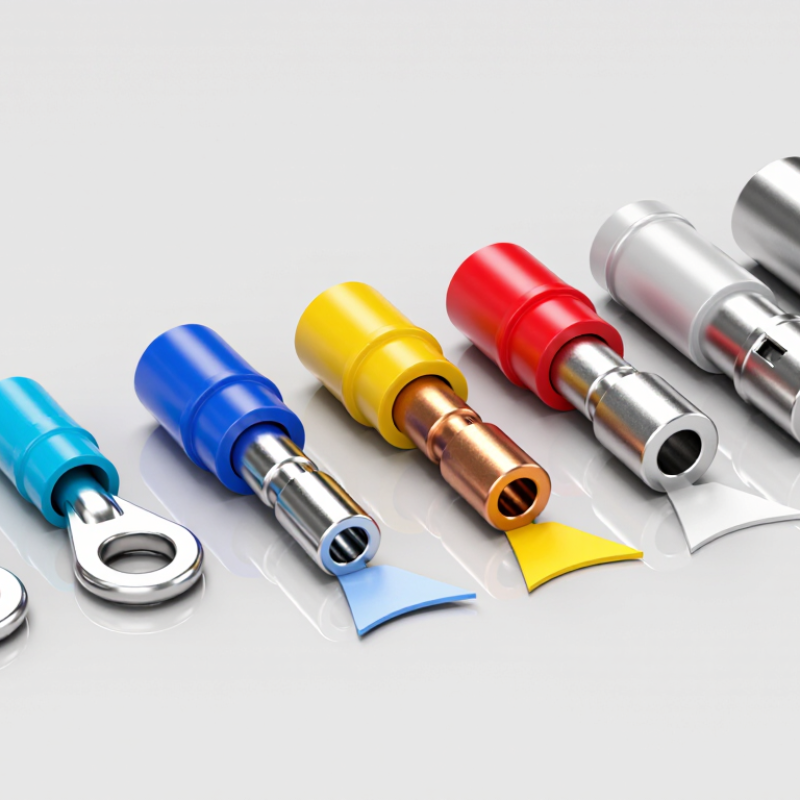
Top 10 Types of Ring Terminal Lugs for Buyers

Ring Terminal Lugs Explained: Ring, Barrel, Conductor, and Crimp

A ring terminal lug has a closed eye that sits over a stud or screw.

Its inner diameter should match the fastener, while the lug’s current rating must suit the circuit. A loose fit can shift under vibration; a tight fit may not seat flat. The barrel is the metal sleeve that holds the wire. Check its listed conductor range, not just its outside size. Wire gauge and strand count both matter. Fit matters.

The conductor should reach the barrel’s end without exposed strands escaping near the opening. Strip only the specified length; too much bare wire can invite corrosion or accidental contact.

Crimp pressure must match the terminal and wire size. Use a suitable crimping tool and die, then inspect for an even, firm compression. A light pull can reveal a weak connection, but it does not replace the maker’s installation guidance. This detail is easy to overlook.

Also consider the setting: moisture, heat, and vibration may affect material and insulation choices. A clean crimp is useful, but it cannot correct the wrong lug size.

10 Types by Metal, Coating, Insulation, and Mounting Design

Ring terminal lugs vary by material, finish, insulation, and barrel or ring shape. Bare copper offers strong conductivity and suits many general-purpose connections. Tinned copper adds a protective coating that can help resist corrosion in damp settings. Aluminum lugs are lighter, but require compatible conductors and installation guidance. Nickel-plated copper can suit applications with higher temperatures, though its ratings must be checked carefully.

Insulation also changes the choice. PVC-insulated lugs provide a simple cover for everyday wiring, while nylon insulation is often chosen for greater toughness. Heat-shrink versions tighten around the wire after heating, helping shield the crimp area. Non-insulated lugs leave the barrel exposed, which can help when space is limited or a separate sleeve is preferred. Fit matters. A neat-looking crimp can still be wrong.

Mounting designs include standard rings, flanged rings, and angled or flag-style rings. A standard ring fits over a stud; a flanged edge can help resist pull-through on some panels. Angled designs can make connections easier in cramped spaces. Long-barrel lugs provide more crimping area, but need room behind the terminal. Check wire size, stud diameter, temperature rating, and the recommended crimp tool before choosing. There is no universal best type. In practice, one small mismatch can undo an otherwise sound connection.

Material Data: Copper ≈100% IACS vs. Aluminum ≈61% IACS

For buyers comparing ring terminal lugs, conductivity is a useful starting point. Annealed copper is rated near 100% IACS, while aluminum is approximately 61% IACS. IACS compares electrical conductivity with a standard reference; it does not guarantee a lug’s performance in every installation. At the same size, copper generally carries current with less electrical resistance. That matters in compact panels, where a warm connection can signal excessive resistance or a poor crimp. Copper is often heavier and may cost more, but its conductivity can support a smaller conductor interface. Details matter.

Aluminum’s lower conductivity does not make it unsuitable. A larger cross-section can help compensate, provided the lug is designed for the conductor and application. Check the manufacturer’s current rating, wire range, temperature limits, and approved crimp method rather than comparing IACS figures alone. Aluminum surfaces form oxide, so connection design and preparation are important. When aluminum connects to copper, use a terminal specifically rated for that pairing; otherwise, corrosion or a rising-resistance joint may follow. A practical caveat: field conditions rarely match a clean data sheet. Vibration, moisture, installation quality, and conductor size all influence long-term performance.

Top 10 Types of Ring Terminal Lugs for Buyers - Material Data: Copper ≈100% IACS vs. Aluminum ≈61% IACS

Material conductivity figures below are approximate reference values at 20°C: annealed copper is the 100% IACS reference, while commercially pure aluminum is about 61% IACS. Actual lug performance depends on alloy, plating, dimensions, temperature, and termination quality.

# Ring Terminal Type Typical Material Approx. Bulk Conductivity Typical Use Buyer Considerations
1 Uninsulated copper ring lug Copper, often tin-plated or bare Copper ≈100% IACS Panel wiring, grounding, and applications where inspection is useful Match conductor size and stud diameter; select plating for the environment.
2 Vinyl-insulated copper ring lug Copper barrel with vinyl insulation Copper conductor ≈100% IACS General-purpose low-voltage wiring Check insulation temperature and voltage ratings, wire range, and tool compatibility.
3 Nylon-insulated copper ring lug Copper barrel with nylon insulation Copper conductor ≈100% IACS Control panels and wiring where a durable insulating sleeve is desired Verify the terminal's specified crimp profile and operating-temperature range.
4 Heat-shrink copper ring lug Copper barrel with heat-shrink insulation, sometimes adhesive-lined Copper conductor ≈100% IACS Automotive, marine, and other wiring exposed to moisture or vibration Confirm sealing claims and environmental ratings; use the specified heat application method.
5 Heavy-duty copper compression lug High-conductivity copper, commonly tin-plated Copper ≈100% IACS Larger conductors in power distribution and grounding systems Use the listed conductor range, die, and crimping tool; check applicable standards.
6 Long-barrel copper ring lug Copper, often tin-plated Copper ≈100% IACS Applications requiring a longer conductor engagement or specified multi-crimp connection Confirm barrel length and the prescribed number and placement of crimps.
7 Flexible-conductor copper ring lug Copper barrel designed for fine-stranded cable Copper ≈100% IACS Fine-stranded flexible cable in equipment and mobile installations Check explicit compatibility with the strand class and cable construction.
8 Aluminum ring lug Electrical-grade aluminum alloy Aluminum ≈61% IACS Aluminum conductors in power distribution installations Use only with conductor materials and preparation methods specified for the lug; account for oxide and joint requirements.
9 Dual-rated copper/aluminum ring lug Typically an aluminum body with a listed conductor range; construction varies Depends on the body alloy; aluminum is commonly ≈61% IACS Connections designed for specified copper or aluminum conductors Verify the exact listing, conductor material, size range, and installation instructions.
10 90-degree copper ring lug Copper, commonly tin-plated Copper ≈100% IACS Space-constrained equipment and connections requiring a right-angle cable exit Check bend orientation, clearance, mounting-hole size, and cable-bend requirements.

Conductivity is a material reference, not a direct rating of a finished terminal. Select terminals by conductor size, stud size, current and temperature ratings, environmental conditions, applicable approvals, and the manufacturer's installation instructions.

Fit Data: Match AWG or mm² Wire Size to Stud-Hole Diameter

Top 10 Types of Ring Terminal Lugs for Buyers
Fit Data: Match AWG or mm² Wire Size to Stud-Hole Diameter

Ring-terminal fit depends on two separate measurements: wire size and stud-hole diameter. They are not interchangeable. A lug sized for 10 AWG wire might have a 1/4-inch hole, while the equipment stud may require M6. Check both markings before ordering. A close visual match is not enough; a loose hole can shift under vibration.

ASTM B258 dimensional tables list 10 AWG copper wire at about 5.26 mm² and 12 AWG at about 3.31 mm². IEC 60228 also defines nominal conductor cross-sections in metric sizes. These references help compare wire capacity, but they do not determine the lug’s stud-hole size. Check the lug drawing for the hole’s nominal diameter, then confirm it against the actual stud. A small mismatch can complicate tightening. Even careful buyers sometimes overlook this.

Tips: Measure the stud with calipers, and check whether the drawing lists inches or millimeters. Match the lug barrel to the conductor size, too. A 6 mm² lug is not automatically suitable for 6 AWG wire. Follow the terminal maker’s specified crimp tool and die. If the wire sits loosely or strands are cut, stop and reassess; that detail is easy to miss.

Compliance: UL 486A-486B and IEC 61238-1-1 for Connectors up to 1 kV

Top 10 Types of Ring Terminal Lugs for Buyers

For connectors rated up to 1 kV, compliance depends on the exact lug and its intended use. UL 486A-486B and IEC 61238-1-1 address connector performance, but they are not interchangeable approvals. Check the product documentation to confirm which standard applies, and whether the tested connector matches your conductor material, size, and installation method. A familiar shape is not proof of suitability.

IEC 61238-1-1 covers compression and mechanical connectors for power cables up to 1 kV, with requirements and tests for electrical and mechanical performance. UL 486A-486B covers wire connectors; confirm the applicable listing and conditions for the specific ring lug. Look for clear conductor ranges, copper or aluminum compatibility, required crimp tooling, and temperature ratings. Small details matter. A lug that fits a stud may still be wrong for the wire or tool. Standards markings help, but they do not replace checking the manufacturer’s instructions or the complete assembly requirements.

Tips: Compare the marking and datasheet against the actual cable and terminal stud before ordering. Keep the specified die and installation instructions with the job records. If the documents are vague, pause and ask for clarification. That extra check can feel fussy, but it is cheaper than discovering a mismatch after installation.

Top 10 Types of Ring Terminal Lugs for Buyers

A typical-construction comparison for ring terminal lug types. Standards context: UL 486A-486B and IEC 61238-1-1 for applicable connectors up to 1 kV.

Bars indicate whether a feature is typically included in the named construction: 1 = yes, 0 = no. Actual designs vary. This chart does not indicate certification or compliance; verify the specific lug, conductor, installation method, and applicable standard before purchase.