
Choosing an Automobile Bushing manufacturer in China involves more than comparing unit prices. These components help manage vibration, movement, and contact between vehicle parts. Their performance can affect ride comfort, noise, and service life. Small details matter. A rubber compound that suits one application may not suit another. Buyers should clarify the intended vehicle, operating conditions, dimensions, hardness, and expected production volume before requesting quotations.
This guide introduces key considerations for global buyers exploring Chinese manufacturers. It focuses on practical checks, including material selection, engineering support, sample evaluation, production consistency, and quality documentation. Ask how a supplier controls critical dimensions and tests finished bushings. Request relevant drawings, inspection records, and samples where appropriate. A polished catalog is useful, but it cannot replace verification. Neither can a low price. Supplier capabilities and lead times can change, so confirm current details directly and compare responses against your own specifications.
Some sourcing choices remain uncertain. A sample may perform well while a larger production batch reveals variation. Buyers should discuss acceptable tolerances, packaging, communication, and corrective-action processes before placing substantial orders. This overview is intended to support careful evaluation, not to declare one manufacturer suitable for every project. The best fit depends on the application, evidence provided, and the buyer’s requirements.
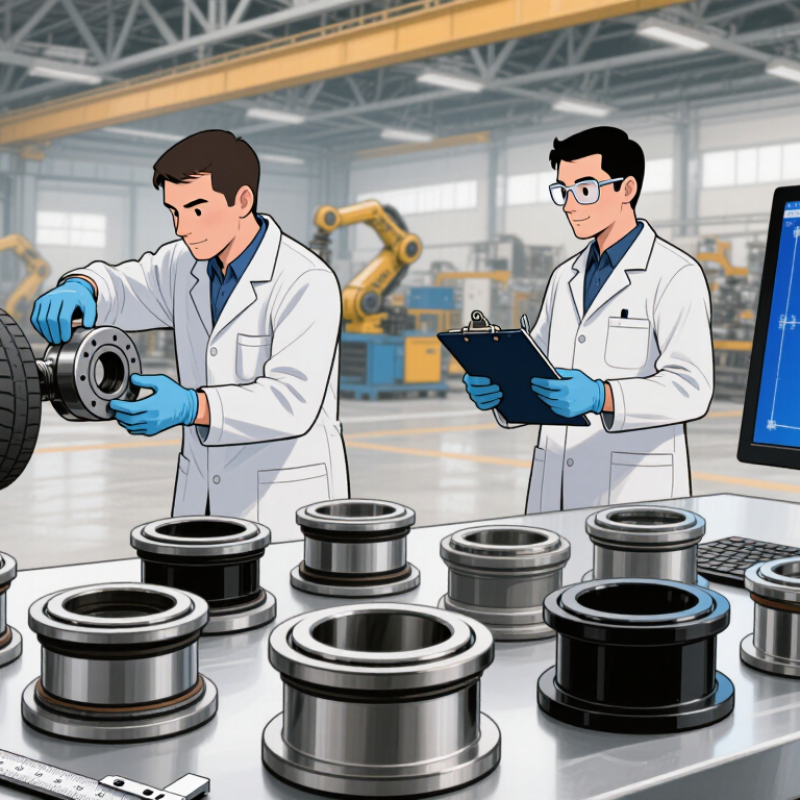
Automotive bushings sit between moving or vibrating components, such as a control arm and its mounting point. Their job is not simply to soften impacts. They also help maintain suspension geometry, reduce cabin noise, and allow controlled movement under load. Common designs include bonded rubber-metal bushings, cylindrical sleeves, and spherical bushings. Each handles motion differently, so the right type depends on its location and operating forces.
Rubber remains widely used because it absorbs vibration and works quietly. Natural rubber can provide flexibility and resilience, while synthetic compounds such as EPDM may suit applications exposed to heat and weather. Oil-resistant compounds may be preferable near fluid exposure. Polyurethane can offer firmer support, but may transmit more road harshness. No material is best in every position. A bushing’s hardness, shape, bonding quality, and temperature range all affect performance. On a workbench, two parts may look similar; under repeated braking and cornering, they can behave quite differently.
Tips: Check the specified dimensions, hardness, and working conditions before comparing suppliers. Ask how samples are tested for compression, bonding, and durability. A useful specification still needs real-vehicle validation. Even careful selection can miss a detail.
China’s automotive bushing manufacturing landscape includes large production centers and smaller specialist workshops. Factories commonly produce rubber, rubber-to-metal, and polyurethane components for passenger cars and commercial vehicles. Many suppliers can adjust dimensions, compounds, and hardness to match a buyer’s drawings. The range is broad. That matters.
Production quality depends on more than molding equipment. Rubber mixing, metal-sleeve preparation, bonding, curing, and inspection each affect durability. Skilled teams may check dimensions with gauges and test samples for adhesion or compression. Yet process control can vary between suppliers, and a polished sample does not guarantee consistent batches. Buyers should review inspection records and ask how production changes are controlled.
When evaluating a manufacturer, request material specifications, tolerance data, and test methods before approving samples. Ask how the supplier handles tooling maintenance and identifies defects during production. Small details matter, such as clean bond surfaces and consistent sleeve alignment. Still, gaps remain. Communication about drawings or test limits can be imperfect, so written requirements and sample approval help reduce avoidable misunderstandings.
| Manufacturing Segment | Typical Bushing Products | Common Materials | Typical Manufacturing Processes | Common Vehicle Applications | Buyer Evaluation Points |
|---|---|---|---|---|---|
| Rubber-to-metal components | Suspension bushings, control-arm bushings, stabilizer bushings, and bonded mounts | Natural rubber and synthetic elastomers; steel sleeves or inserts where the design requires them | Rubber compounding, metal-part preparation, rubber-to-metal bonding, molding, and curing | Passenger-car suspension and chassis systems; selected commercial-vehicle assemblies | Request drawings and material specifications; check bond integrity, dimensions, hardness, and test conditions. |
| Elastomer bushing specialists | Solid, voided, and profile-shaped rubber bushings for vibration isolation and articulation | Natural rubber, EPDM, and other elastomers selected according to the operating environment and design | Compression, transfer, or injection molding; trimming; dimensional and visual inspection | Suspension, steering, engine support, and other vehicle systems, depending on the part design | Confirm the compound’s temperature, fluid, ozone, and aging requirements against the intended application. |
| Polyurethane component producers | Polyurethane suspension bushings and other elastomeric components | Cast or molded polyurethane formulations in application-specific hardness ranges | Metering and mixing, casting or molding, curing, finishing, and inspection | Aftermarket and specialized vehicle applications where polyurethane is specified | Compare hardness, geometry, load and deflection data, and compatibility with the mating components. |
| Metal sleeve and insert suppliers | Inner sleeves, outer shells, spacers, and inserts used in bushing assemblies | Steel and other specified metals; surface finishes depend on design and corrosion requirements | Tube cutting, stamping, machining, forming, welding where required, and surface treatment | Rubber-metal bushings and related chassis or mounting assemblies | Verify material grade, critical dimensions, weld requirements, corrosion protection, and traceability. |
| Integrated bushing assembly manufacturers | Finished bonded assemblies combining elastomer, sleeves, and other specified components | Application-specific rubber or polyurethane compounds, metal parts, and bonding systems | In-house or coordinated metal preparation, bonding, molding, curing, assembly, and testing | Original-equipment and replacement-part supply programs, subject to customer qualification | Assess process control, change management, batch traceability, inspection plans, and production capacity. |
| Custom and low-volume production | Prototype, service, or limited-run bushings made to customer drawings or approved samples | Materials defined by the drawing, specification, or agreed validation plan | Tooling development, sample molding, dimensional checks, and production ramp-up as required | Development projects, legacy vehicles, special-purpose vehicles, and replacement requirements | Agree on tooling ownership, sample approval criteria, minimum order quantities, lead times, and revision control. |
The entries describe common product and process categories, not specific companies or brands. Actual capabilities, certifications, test methods, and production capacity should be confirmed directly with each supplier and against the applicable customer specification.
China produced about 30.2 million motor vehicles in 2023, according to OICA’s 2023 production statistics. That scale supports a broad supply base, but output volume alone does not prove a bushing supplier is reliable. Global buyers should assess production controls, engineering support, and repeatability. Ask for dimensional inspection records, rubber compound specifications, and evidence of metal-to-rubber bond testing. For a suspension bushing, even a small change in hardness can affect vibration, noise, and service life. Request samples from regular production, not only hand-finished prototypes. A polished sample can hide process variation.
One detail buyers sometimes miss: matching a drawing is not the same as matching performance. Confirm the operating temperature, load direction, and expected movement with the supplier. Then check whether its fatigue tests reflect those conditions. OICA’s figures describe vehicle production, not bushing quality; treat them as market context, not a supplier scorecard. Some sourcing decisions still depend on clear communication, and that can be difficult across technical teams.
Tips: Share a controlled drawing and application data before requesting a quote. Compare test methods, tolerances, and packaging—not just unit price. Ask how changes to tooling or compound are documented. Small gaps matter.
A reliable bushing supplier should explain how its product fits your application, not just quote a unit price. Share the drawing, load range, operating temperature, and exposure to oil, water, or ozone. Ask how the proposed rubber compound and metal sleeve address those conditions. A hardness value, such as Shore A, is useful, but it does not describe the whole part.
Ask for dimensional inspection records, material specifications, and test results for compression, bonding, or durability. Ask for evidence. Sample parts can reveal details that a catalogue misses: uneven rubber edges, rough sleeve surfaces, or dimensions that make installation difficult. Check whether the supplier can trace samples and production batches to the same approved specifications. Small details matter.
A factory audit or live production review can help confirm equipment, inspection steps, and actual capacity. A neat certificate is not proof that every batch will match it. I would still compare documents against physical samples, and I would clarify who handles changes to drawings or materials. Send the same technical questions to each supplier. Compare response quality, lead time, packaging, and inspection plans alongside price. Some early answers may be vague; that is a reason to ask for clearer records before placing an order.
For global buyers, export readiness means more than a competitive quotation. UNCTAD’s Review of Maritime Transport 2023 reports that shipping carries over 80% of world trade by volume, so packaging and shipment planning matter. Ask for confirmed lead times, carton dimensions, pallet details, and lot-level traceability before approving an order. For rubber-metal bushings, poor storage or loose packing can damage bonded surfaces before the parts reach your plant. Paperwork matters.
Check that any quality certificate covers the actual manufacturing site and product scope. IATF 16949 and ISO 9001 can indicate structured quality systems, but neither guarantees every batch will meet your drawing. Request inspection records for rubber hardness, dimensions, bond strength, and compression set. For a new supplier, agree on sample testing, acceptance limits, and corrective-action procedures in writing. A third-party laboratory can verify critical results when the application is safety-sensitive. This adds cost, and it may slow approval; that trade-off deserves honest discussion. Some buyers focus heavily on certificates and miss basic details, such as whether the shipped part matches the approved sample. Check both.
Edition year of selected international management-system standards commonly relevant to automotive manufacturing and supplier reviews.
Edition years identify the versions shown, not a supplier’s certification status. International buyers should verify each certificate’s validity, scope, and covered manufacturing site.