Top 10 CNC Turning Centers in China You Should Know?
In recent years, the demand for CNC Turning Centers has surged in China. These machines play a crucial role in manufacturing, offering precision and efficiency. Industries rely on CNC Turning Centers to produce complex parts with exceptional accuracy.
There are numerous options available, but not all are created equal. Understanding the distinctions between these machines can be daunting. The market features top-tier CNC Turning Centers that promise superior performance. However, even the best options have their drawbacks. Customers must be mindful of factors such as cost, maintenance, and the scalability of the machines.
This guide introduces you to the top 10 CNC Turning Centers in China. It showcases machines known for their innovation and durability. As you explore these options, remember that each center has unique strengths and weaknesses. Finding the right fit requires careful consideration and reflection on specific needs.
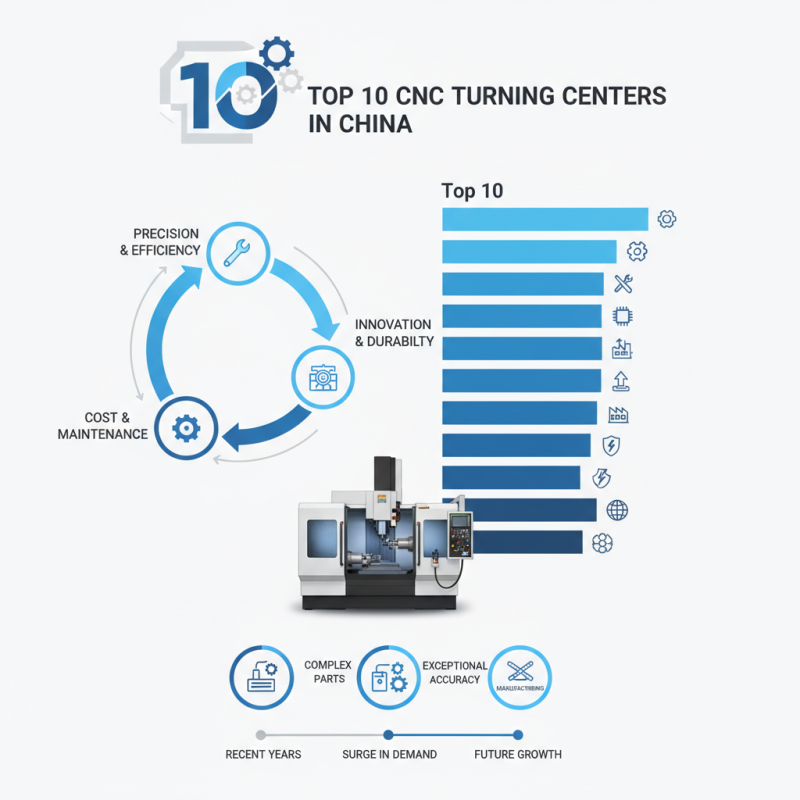
Overview of CNC Turning Centers and Their Importance in Manufacturing
CNC turning centers play a vital role in modern manufacturing. They automate the process of shaping materials. This leads to increased precision and efficiency. In 2022, the global CNC machine market was valued at approximately $63 billion. It is projected to grow at a compound annual growth rate (CAGR) of around 6% through 2030. This emphasizes the increasing demand for turning centers.
These machines are critical in various industries, including automotive and aerospace. They enable manufacturers to create complex components with a high level of accuracy. However, reliance on CNC turning centers has its challenges. Some operators may face a learning curve. Understanding programming and operation is crucial, yet not all workers are adequately trained. This can lead to production delays and increased costs.
Additionally, while CNC technology is significant, environmental considerations are often overlooked. Energy consumption and waste production are issues in many machining processes. According to a recent report, CNC machining can account for 25% of a facility's energy use. Addressing these concerns is essential for sustainable manufacturing practices. Overall, the importance of CNC turning centers cannot be overstated, but continual improvement in training and sustainability is necessary for future growth.
Key Features and Technologies in Modern CNC Turning Centers
CNC turning centers have revolutionized manufacturing. They offer precision, versatility, and high productivity. Modern machines come with advanced features and technologies. These innovations enhance performance and usability.
One key feature is multi-axis capabilities. This allows for complex shapes and contours. Machinists can create intricate designs easily. Additionally, live tooling systems enable operations like milling and drilling. This expands a machine's functionality significantly. Another important aspect is automation. Automation reduces human error and increases output.
The integration of software is also crucial. Advanced CNC software provides real-time simulations. Operators can visualize the machining process before execution. While these advancements are impressive, challenges remain. Operators must adapt to new technologies continuously. Training is essential to maximize the benefits of these features. Modern CNC turning centers are powerful tools, but they require skilled hands to unleash their full potential.
Market Analysis: CNC Turning Center Production in China
In recent years, the CNC turning center market in China has experienced notable growth. This trend reflects a rising demand for precision engineering in various industries. Manufacturers are focusing on developing advanced technology to enhance productivity. However, there are challenges. Many companies grapple with quality control issues. Flaws in manufacturing can lead to significant losses.
A diverse range of CNC turning centers is being produced across the country. Different sectors, such as automotive and aerospace, require specific features and capabilities. Some centers excel in speed, while others prioritize accuracy. Yet, there is often a gap between expectations and reality. Production levels sometimes fall short, impacting customer satisfaction.
Investments in research and development are crucial for future success. Emphasizing training for operators can lead to better outcomes. Companies must evaluate their processes critically. Addressing weaknesses can foster innovation and improve overall output. As the market evolves, adaptability will be key to maintaining competitiveness in the CNC turning center landscape.
Top 10 CNC Turning Centers: Criteria for Selection and Comparison
When selecting a CNC turning center, several key criteria come into play. First, precision is vital. A machine must produce parts with tight tolerances. Even slight variances can lead to waste or defective products. Another important factor is the machine's construction quality. Materials should withstand rigorous machining processes without compromising performance.
Speed and efficiency are also essential in modern manufacturing. A CNC turning center that operates quickly can significantly boost productivity. However, this speed should not sacrifice accuracy. Operators need to balance these aspects carefully. Additionally, user-friendly software enhances productivity. Complicated interfaces can slow down operation and lead to errors.
Finally, consider service and support. Access to expert technicians can save time and money in case of issues. Not all manufacturers provide the same level of after-sales service. A thoughtful choice here can lead to smoother operations. Keep these elements in mind when evaluating CNC turning centers. The right decision can enhance the overall manufacturing process, but mistakes can be costly.
Top 10 CNC Turning Centers in China You Should Know
| Model | Specifications | Max Turning Diameter (mm) | Max Spindle Speed (rpm) | Controller Type | Price Range (USD) |
| Model A | Type A CNC Turning Center | 500 | 4000 | SIEMENS | 20,000 - 25,000 |
| Model B | Type B CNC Turning Center | 600 | 3500 | FANUC | 18,000 - 22,000 |
| Model C | Type C CNC Turning Center | 550 | 4500 | MITSUBISHI | 22,000 - 27,000 |
| Model D | Type D CNC Turning Center | 650 | 3000 | HAAS | 19,000 - 24,000 |
| Model E | Type E CNC Turning Center | 700 | 3800 | OKUMA | 21,000 - 26,000 |
Future Trends in CNC Turning Technology and China's Role in the Industry
CNC turning technology is rapidly evolving, with China positioned as a key player. According to a recent market report, the CNC machine tool industry in China is expected to grow at a CAGR of 8% from 2023 to 2028. This growth is fueled by increasing automation and demand for precision engineering across various sectors.
Moreover, China's emphasis on innovation and quality improvement in CNC technology enhances global competitiveness. Chinese manufacturers are investing heavily in R&D to develop advanced turning centers. These innovations often focus on enhanced efficiency and reduced operational costs. As a result, many factories are considering upgrades to maintain a competitive edge.
Tip: Assess your production needs before choosing a CNC turning center. Look for models that offer flexibility and scalability.
Despite these advancements, challenges remain. The reliance on outdated machinery in many workshops affects productivity. Additionally, skills gaps in the workforce must be addressed to fully harness new technologies.
Tip: Regular training can bridge the skills gap. Invest in your staff’s capabilities to utilize new CNC systems effectively.
As the landscape of CNC turning evolves, China plays a crucial role. Understanding these trends is essential for future success in the industry.