
China’s mobile excavator market brings together established construction-equipment groups and specialist manufacturers. Their machines may look similar in a product photo, yet differ sharply on a muddy site, a narrow city street, or a roadwork project with frequent stops. For buyers, the useful questions are practical: How quickly can the excavator travel between work areas? Does its hydraulic system respond smoothly under load? Are parts and trained service technicians available nearby?
This guide examines leading Chinese manufacturers through those details, rather than relying on rankings alone. It considers product range, operating performance, manufacturing experience, service support, and the kinds of jobs each brand is suited to. A compact machine may reach a restricted urban site, while a larger wheeled excavator may better handle repeated movement between road projects. Neither is automatically the right choice. Tire condition, attachment compatibility, operator comfort, and maintenance access matter, too.
A note on attribution: no source articles or verifiable expert quotation were provided, so I cannot responsibly invent a named specialist’s words. That caution reflects a real limitation of manufacturer comparisons: specifications are not the whole story, and claims should be checked against current product documentation and local dealer support. A closer look at China’s top Mobile Excavator manufacturers can help buyers build a shortlist, but site conditions and service access should guide the final decision.
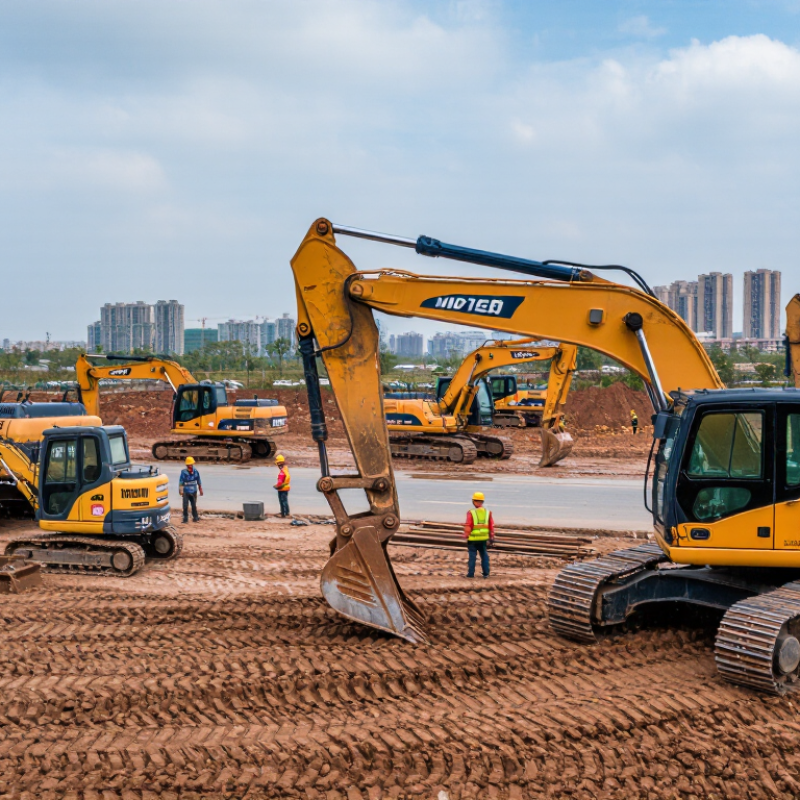
A mobile excavator is a hydraulic excavator mounted on wheels, rather than continuous tracks. Its upper structure rotates, while the boom, stick, and bucket dig, lift, and load. The wheeled undercarriage lets it move between nearby work areas without a transport trailer. That distinction matters. Mobility does not mean every machine can travel legally on every public road; weight, speed, and local rules still apply. Many models use a dozer blade or outriggers to steady the chassis during digging. On firm pavement, wheels are quick and convenient. On wet clay, loose gravel, or steep ground, they can lose traction and stability.
For buyers, “mobile” describes a trade-off, not a promise of better performance everywhere. Check travel speed, axle configuration, ground pressure, turning clearance, and support-leg setup against the actual site. A machine that shifts quickly between roadside drainage jobs may be less suitable for soft, uneven excavation. The UNEP Global Status Report for Buildings and Construction 2024/2025 reports that the sector used 34% of global energy and produced 37% of energy- and process-related CO₂ emissions in 2022. Those figures cover buildings and construction broadly, not excavators alone, so they should not be read as machine-level data. Still, fuel use and idle time deserve attention. I would also inspect tire wear and stabilizer response; mobility is useful, but it can be overrated.
China’s mobile excavator market has gradually moved from a specialized choice toward a practical option for jobs requiring frequent relocation. Wheeled machines can travel between nearby sites without a low-bed trailer, helping crews handle municipal repairs, roadside drainage, and utility maintenance. That convenience matters on narrow streets. It does not suit every site: soft ground, steep slopes, and demanding excavation can still favor tracked machines.
Buyers increasingly compare more than purchase price. Fuel use, hydraulic response, operator visibility, tire wear, service access, and resale value all influence decisions. Product development has brought more attention to compact layouts, cab comfort, and attachment compatibility. Digital diagnostics and cleaner power options are also gaining visibility. Progress remains uneven, though. Technician coverage and replacement-part availability can vary by region. A polished specification sheet is not field evidence.
Tips: Match operating weight and tire setup to real ground conditions. Request a supervised demonstration with the attachments your crew will use. Check turning radius and local road requirements. Ask about service response times, then record fuel use and cycle times during a trial. Small details matter.
China’s leading mobile excavator manufacturers build wheeled machines for roadwork, utility repairs, and jobs that move between sites. Their designs balance travel speed with digging stability. A useful comparison starts with operating weight, reach, bucket capacity, and transport dimensions. These figures affect how a machine performs in a narrow street or beside a drainage trench.
Look closely at the hydraulic system, axle rating, braking performance, and outrigger design. On uneven ground, stable outriggers can make a clear difference. Check whether common attachments fit securely and whether service points are easy to reach. A mechanic should be able to inspect filters and hoses without removing half the machine. Small details matter. Ask manufacturers for test records, parts availability, warranty terms, and references from similar working conditions. Claims are easier to trust when supported by specific documents.
No single machine suits every project. A compact model may turn neatly in a city lane but feel underpowered on deeper excavation. A heavier unit may dig confidently yet consume more fuel during frequent travel. Even a well-built excavator can disappoint if local technicians lack training or spare parts arrive slowly. Brochures help, but a live demonstration on firm and uneven ground reveals more. Listen for pump noise, watch boom response, and check for hydraulic leaks after the machine has worked under load.
Chinese mobile excavator manufacturers cover a broad range, from compact machines for narrow streets to heavier units for roadwork and site preparation. Wheeled models can move between nearby jobs without a transport trailer, while tracked versions suit softer ground. A city crew clearing a roadside drain may value a tight turning radius more than maximum digging depth. There is no single best configuration.
Product differences also show up in the cab and hydraulic system. Some machines offer adjustable flow for attachments such as breakers or grapples, while others prioritize smooth, familiar controls. Digital displays may track fuel use, service intervals, and machine warnings. Useful, but only if operators can read them quickly in bright sunlight. Technology on paper is not always technology that helps on site.
When comparing manufacturers, examine operating weight, reach, bucket options, and transport dimensions alongside headline power. Ask how easily filters and hydraulic lines can be reached; a cramped service panel costs time. Telematics can help fleet managers spot idle hours, though signal coverage and software support vary. Still, a tidy specification sheet can mislead. Request a live demonstration with the attachment and ground conditions you actually use, then check parts availability and service response in your region.
| Comparison Dimension | Compact Wheeled Excavators | Mid-Size Wheeled Excavators | Heavy Wheeled Excavators |
|---|---|---|---|
| Typical operating-weight range | Approximately 6–10 tonnes | Approximately 10–16 tonnes | Approximately 16–23 tonnes |
| Typical bucket capacity | About 0.2–0.4 m³ | About 0.3–0.6 m³ | About 0.5–1.0 m³ |
| Common applications | Urban utility work, landscaping, small construction sites, and roadside maintenance | Municipal construction, road projects, drainage, and general-purpose excavation | Large infrastructure projects, material handling, and higher-volume excavation |
| Mobility strengths | Compact dimensions and convenient movement between nearby work areas | Balances road mobility with digging capacity for varied job sites | Offers greater working capacity; transport and access requirements need closer planning |
| Common product-range considerations | Check overall width, tail swing, and compatibility with attachments for confined sites | Compare boom and arm options, stabilizer configurations, and attachment hydraulics | Review axle loading, lifting requirements, transport limits, and available counterweight options |
| Hydraulic and control technology | Load-sensing hydraulics and proportional auxiliary controls may be available, depending on configuration | Compare hydraulic flow settings, multi-function performance, and operator-adjustable work modes | Assess sustained hydraulic performance, precision controls, and suitability for heavy attachments |
| Engine and emissions checks | Confirm the engine rating and emissions certification for the machine’s intended market | Check applicable non-road emissions requirements, after-treatment equipment, and service access | Verify local compliance, fuel requirements, and maintenance needs for emissions-control systems |
| Cab and operator technology | Look for clear displays, ergonomic controls, visibility, and optional rear-view assistance | Compare camera availability, adjustable work modes, and in-cab diagnostic information | Prioritize visibility, comfort for long shifts, and monitoring features suited to intensive operation |
| Best fit when selecting a machine | Frequent short moves and restricted work areas matter most | A single machine must cover a broad mix of municipal and construction tasks | Higher capacity is essential and the site can accommodate the machine’s size and load |
Figures are indicative ranges for common wheeled-excavator classes, not specifications for any particular manufacturer or model. Actual operating weight, bucket capacity, equipment, and emissions certification vary by configuration and destination market.
A Chinese mobile excavator should fit the jobsite, not just look strong on a specification sheet. Check operating weight, digging depth, travel speed, and lifting capacity against your daily tasks. A wheeled model can move quickly between paved work areas, but soft ground may demand different tires or support. Measure access points too: a few centimeters can decide whether the machine reaches a narrow site.
The McKinsey Global Institute’s 2017 report, Reinventing Construction, estimated that construction labor productivity had grown about 1% annually over the previous two decades, compared with 3.6% in manufacturing. This makes uptime and cycle time practical buying criteria. Ask for fuel-use figures under comparable working conditions, not just ideal test results. Inspect service access, parts availability in your region, warranty terms, and the local technician response time. A lower purchase price can be costly if routine maintenance keeps the machine parked.
Tips: Bring your common attachments to a demonstration. Test turning, braking, and digging on ground similar to your site. Check the cab sightlines, too. A polished demo may not reflect a full shift, so request references from operators with similar work. No single specification settles the choice.