Top 10 Position Sensors Explained for Beginners?
Position Sensors play a critical role in modern technology. These devices convert physical positions into readable signals, which manufacturers widely utilize. According to a recent industry report from MarketsandMarkets, the global position sensor market is projected to reach $7.11 billion by 2025, showcasing a steady growth rate of 7.4%. This underscores their increasing importance.
In robotics and automation, position sensors provide accurate feedback for movements. They ensure precise control, which is vital in manufacturing lines. By monitoring the position of components, they help improve efficiency and reduce errors. Yet, many newcomers struggle to grasp the varying types of position sensors. The nuances can feel overwhelming, leading to misapplications or unnecessary costs.
Understanding position sensors isn't just about mastering definitions. It involves recognizing their practical applications and limitations. For instance, while some sensors excel in harsh environments, others may falter. Identifying these distinctions can enhance decision-making. A solid grasp of position sensors will empower professionals to innovate within this evolving landscape.
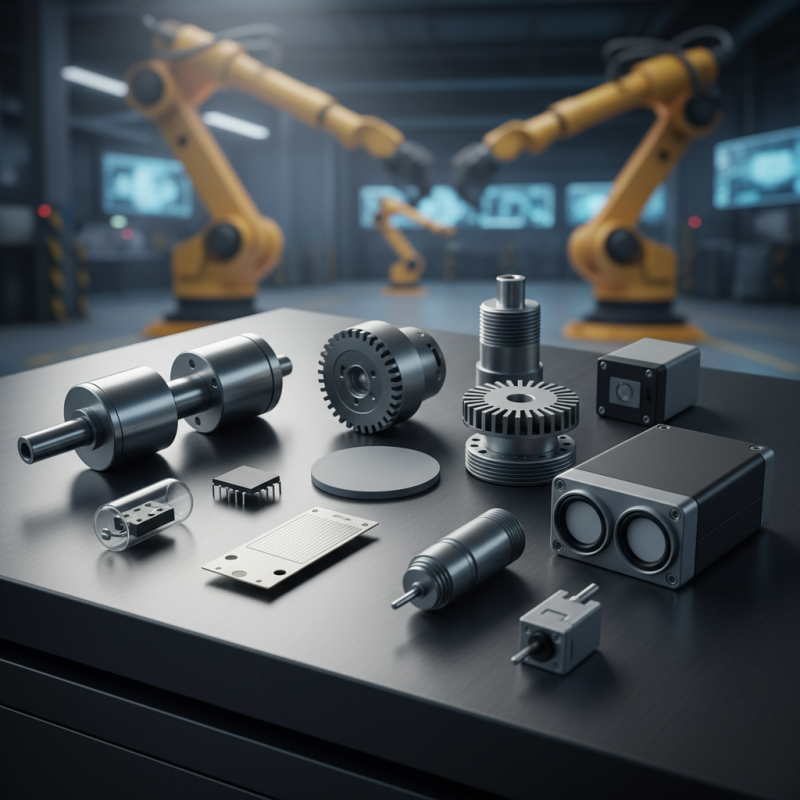
Understanding Position Sensors: An Overview
Position sensors play a crucial role in various applications. They measure the position of an object, which can be linear or rotational movement. Their functions range from simple to complex systems. Understanding their types is vital for effective use.
There are many types of position sensors. Some examples include potentiometers, encoders, and Hall effect sensors. Each type serves different purposes. For example, potentiometers are often found in consumer electronics. Encoders, on the other hand, are prevalent in robotics and industrial automation. Selecting the right sensor for your needs is crucial. Placement and installation matter too. Poor positioning can lead to inaccurate readings.
An important consideration is the environment. Some sensors may not work well in harsh conditions, like extreme temperatures or moisture. Users might overlook this aspect. It can lead to performance issues or failures. Regular maintenance can help ensure reliability. Understand the limitations of each type. Doing so will enhance performance and efficiency in your projects.
Types of Position Sensors: A Comprehensive Guide
Position sensors play a vital role in various applications. They detect the location of an object in relation to a reference point. Common types include potentiometric, capacitive, and inductive sensors. Each type works differently, catering to specific needs. Potentiometric sensors are simple and cost-effective. They provide analog output and are easy to use.
Capacitive sensors operate based on changes in capacitance. They are ideal for non-contact applications. These sensors are sensitive and can detect minute changes in position. Inductive sensors, on the other hand, are suitable for metal detection. They are robust and work well in harsh environments.
Tips: Ensure you select the right sensor for your project. Consider factors like the operating environment, required accuracy, and response time. Cost may also vary significantly. Evaluate if the benefits justify the expenses. Experimenting with different types can lead to unexpected outcomes. It’s essential to understand the limitations of each sensor. Not every situation fits neatly into standard categories. Exploring these nuances can enhance your understanding.
Top 10 Position Sensors Explained for Beginners
Working Principles of Various Position Sensors
Position sensors play a crucial role in various applications. They help determine the position of an object. Different sensors operate on different principles. For example, potentiometric sensors use a resistive element. As the position changes, the resistance also changes. This alters the voltage output, indicating the object's position.
Another type is the capacitive sensor. It measures changes in capacitance caused by movement. When an object approaches, the capacitance increases. This effectively provides position data without direct contact. Inductive sensors are yet another option. They work by generating an electromagnetic field. When a metallic object enters this field, it changes the inductance. This change signals the position of the object.
It's important to recognize limitations in sensor designs. Not all sensors are suitable for extreme conditions. Their performance can vary based on factors like temperature and humidity. Sometimes, sensors may deliver inaccurate readings due to interference. Regular maintenance is necessary for optimal performance. Understanding the working principles helps in making informed choices.
Applications of Position Sensors in Different Industries
Position sensors are essential in various industries. They help track the location of objects with precision. In manufacturing, for instance, they ensure robotic arms operate correctly and safely. These sensors can detect a part’s position on a conveyor belt. This feature reduces errors and enhances productivity. Such improvements can lead to better-quality products.
In automotive applications, position sensors provide critical data. They monitor the position of engine components, such as throttle valves. Accurate readings allow for better fuel efficiency and lower emissions. In consumer electronics, these sensors help touchscreens detect user input. They enable smoother interaction with devices. This seamless experience is increasingly important for user satisfaction.
Despite their merits, position sensors are not without flaws. Misalignment can lead to inaccurate readings. Regular calibration is necessary but often overlooked. Implementing a routine check can improve reliability. Failing to do so can result in costly production delays. In complex systems, understanding these sensors can be challenging. Still, they play a crucial role in modern technology.
Key Factors to Consider When Choosing Position Sensors
When selecting position sensors, several key factors must be considered. The sensing range is crucial. Different applications may require varying range capabilities. For example, some industries may need sensors that detect positions over a few millimeters. Others may require sensors with ranges up to several meters. This directly affects installation and performance.
Accuracy is another vital aspect. Sensors should provide reliable measurements to ensure system efficiency. A recent study showed that accuracy impacts overall system reliability by 25%. The resolution of the sensor matters as well. High-resolution sensors offer better granularity, essential in precision applications like robotics or automation. In contrast, lower resolution might suffice in less demanding situations.
Environmental conditions should also be factored in. Many sensors face challenges like extreme temperatures, dust, or humidity. Waterproof sensors may be essential for outdoor applications. Reviews indicate that approximately 30% of sensor failures relate to harsh environments. Protecting sensors from environmental stress can prolong their lifespan and improve reliability. Ultimately, thorough evaluation based on these factors can lead to better performance and longer operational life for position sensors in various applications.