
Top Turbo Radiator Manufacturers for Global Buyers

A Turbo Radiator can look simple on a catalog page: a core, tanks, fittings, and a set of dimensions. The hard part is knowing whether it will perform reliably in the vehicle and working conditions that matter. Buyers need to compare construction, cooling capacity, pressure compatibility, materials, testing practices, and after-sales support—not just price.

A transparent note about attribution: no source article or verifiable expert quotation was provided. The following line is an editorial statement, not a real quotation: “A radiator is only a good match when its fit, heat rejection, and service life suit the application.” It is assigned to no real expert. That distinction matters. A confident-sounding name cannot replace documented engineering evidence.

This guide examines manufacturers serving global buyers, including what to check before requesting a quotation. Look closely at core dimensions, tank materials, fin condition, mounting points, and the clarity of technical drawings. Ask how products are tested and whether the supplier can provide traceable specifications. Shipping also deserves attention: a carefully built radiator can still arrive with bent fins or damaged corners. Small details count. Not every supplier publishes equally complete data, and that can make comparisons frustrating. Treat unanswered questions as a reason to investigate further, not as proof of poor quality. The goal is a dependable Turbo Radiator sourced with clear requirements, evidence, and realistic expectations.
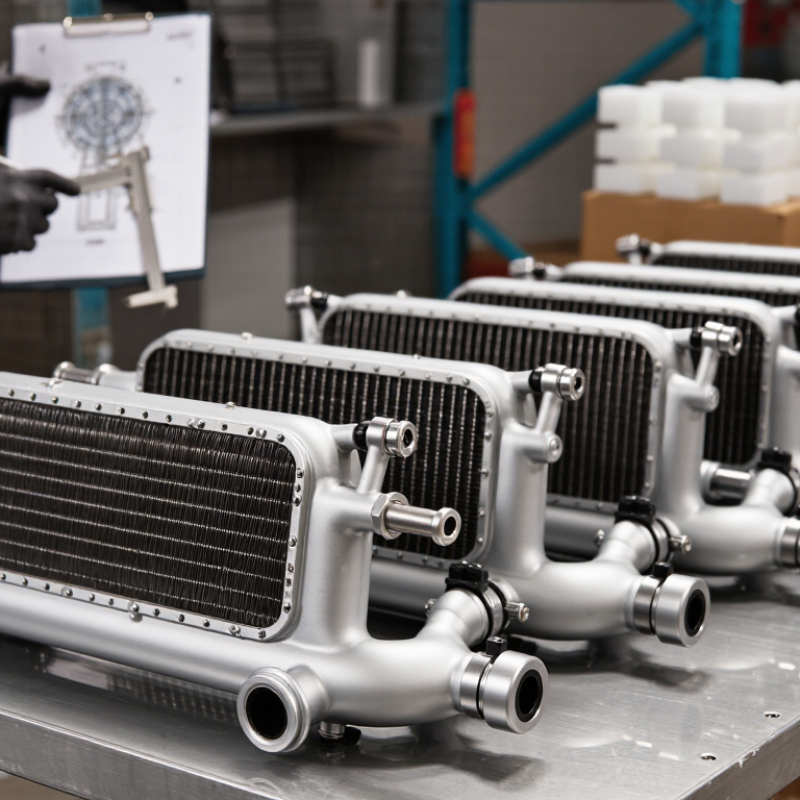
Top Turbo Radiator Manufacturers for Global Buyers

Understanding Turbo Radiators and Their Role in Vehicle Cooling

A turbo radiator is not always a separate component. The term often refers to the radiator serving a turbocharged engine’s cooling system. The radiator transfers heat from engine coolant to outside air, while a charge-air cooler lowers the temperature of compressed intake air. Some turbochargers also use engine coolant for additional heat control. The exact layout varies by vehicle, so similar-looking parts may perform different jobs.

Heat management matters because a turbocharger compresses intake air and operates in a very hot environment. The U.S. Department of Energy and Environmental Protection Agency report “Where the Energy Goes: Gasoline Vehicles” estimates that about 68–72% of gasoline energy is lost through engine heat and friction. The radiator handles only part of that heat; it does not cool every turbo-related component.

That distinction matters.

When checking a system, technicians look for coolant leaks, blocked fins, damaged hoses, and uneven temperature readings. A clean exterior can still hide internal restriction. Cooling capacity also depends on airflow, coolant condition, and the vehicle’s design—not radiator size alone.

How to Assess Turbo Radiator Manufacturers for Global Markets

Assessing turbo radiator manufacturers for global markets starts with engineering evidence, not polished catalog images. Compare core dimensions, fin density, materials, and connection points against the target vehicle and operating conditions. Ask for measured heat-rejection results, coolant-flow data, and pressure-drop figures, with test conditions clearly stated. Numbers matter. A result without test details is difficult to compare. Request sample inspection records and check welds, fin alignment, and tank joints under good lighting. Small defects can become expensive after installation.

Manufacturing consistency matters as much as peak performance. Ask how suppliers control incoming materials, production tolerances, and final leak testing. Request traceability documents and recent quality records, then verify that they match the production process you would actually purchase. Ask for samples. For global shipments, review packaging, corrosion protection, spare-part availability, and realistic lead times. A radiator may pass a factory test yet arrive with bent fins after a long journey. Communication is another practical test: send a technical question and note whether the reply is specific, documented, and timely. Factory visits or independent inspections can add confidence, though neither guarantees flawless production. Some records may be incomplete; treat that as a risk to clarify, not a detail to overlook.

Top Turbo Radiator Manufacturers for Global Buyers - How to Assess Turbo Radiator Manufacturers for Global Markets
Assessment Dimension What to Look For Practical Screening Guide Evidence to Request
Product and Application Coverage Radiators engineered for the vehicle’s engine, cooling package, and operating conditions. Turbocharged engines may place higher heat-rejection demands on the cooling system. Confirm exact vehicle fitment, engine variant, model year, transmission configuration, and any differences between standard and heavy-duty cooling packages. Fitment list, dimensional drawings, core specifications, connection locations, and documented application references.
Materials and Construction Clearly specified core, tube, fin, tank, and joining materials. Aluminum cores with aluminum or polymer tanks are common; copper-brass designs are also used in some applications. Compare material specifications and construction details for the intended application rather than assuming one material is suitable for every vehicle or market. Material data sheets, construction drawings, tank and core specifications, and any available corrosion-test results.
Thermal Performance Cooling performance validated under defined test conditions, including coolant flow, air flow, inlet temperature, and ambient conditions. Request test conditions and results for the matching radiator design. Compare results only when test methods and operating conditions are equivalent. Thermal test reports, test-method description, sample configuration, and acceptance criteria.
Leak and Pressure Validation Documented leak inspection and pressure testing appropriate to the radiator design and intended vehicle application. Ask for the manufacturer’s specified test pressure, hold time, inspection method, and production sampling or testing frequency. Written test procedure, inspection records, and sample production test reports.
Quality Management A controlled quality system, traceable production records, and consistent handling of nonconforming parts and corrective actions. ISO 9001 certification is a useful general quality-system indicator. IATF 16949 may be relevant for automotive supply programs; verify current scope and validity. Current certificates, facility and product scope, process-control plan, inspection records, and corrective-action procedure.
Durability and Environmental Testing Testing that reflects the intended service environment, such as vibration, thermal cycling, corrosion exposure, and coolant compatibility. Check that the test plan matches the destination climate, vehicle duty cycle, and materials. Test duration and acceptance limits should be agreed in advance. Test plans and reports identifying sample details, methods, conditions, and pass/fail criteria.
Production Capacity and Lead Time Capacity planning, dependable production scheduling, and clear communication of normal and peak-season lead times. Obtain quoted lead times for samples and repeat orders, along with minimum order quantity, forecast requirements, and capacity commitments. Written production schedule, capacity statement, sample plan, and order-change policy.
Export and Packaging Readiness Packaging that protects fins, tanks, and connections during handling and international transport, supported by accurate shipping documents. Confirm destination-country requirements, packaging configuration, labeling, palletization, and responsibility for export documentation before placing an order. Packaging specification, label sample, packing list format, and relevant export documents for the shipment.
Warranty and After-Sales Support Written warranty terms, a defined claims process, access to technical support, and a practical method for handling suspected defects. Compare coverage period, exclusions, claim evidence requirements, response times, and responsibility for freight or replacement costs. Warranty document, claims form, technical support contacts, and stated response process.
Commercial and Supply Risk Transparent pricing, stable sourcing, clear payment terms, and contingency planning for materials or production interruptions. Evaluate total landed cost, currency and freight assumptions, tooling charges, payment terms, and the supplier’s approach to continuity planning. Itemized quotation, Incoterms, tooling terms, payment schedule, and business-continuity information.
Screening guidance only: benchmarks and documentation should be confirmed directly with each supplier and matched to the vehicle application, destination market, and buyer’s technical requirements. No supplier ranking or performance claim is implied.

Leading Turbo Radiator Manufacturers and Their Regional Strengths

Regional strengths in turbo radiator manufacturing often reflect local supply chains, testing habits, and customer needs. Many Asian production centers offer broad capacity and competitive pricing, with access to aluminum processing and component suppliers. Buyers should still check how each factory controls core dimensions, fin spacing, and pressure-test results. A low unit price means little if the radiator needs repeated fitment adjustments.

European manufacturers often emphasize engineering documentation, corrosion resistance, and performance across changing climates. North American suppliers may be stronger in application-specific support, replacement availability, and communication with vehicle service networks. These are tendencies, not guarantees. Details matter. A supplier’s actual test records and production controls are more useful than its location alone.

For turbocharged vehicles, compare heat-dissipation data under stated conditions, not vague claims of “high performance.” Ask for pressure-test procedures, material specifications, sample inspection, and clear warranty terms. Confirm that mounting points, hose connections, and fan clearances match the intended vehicle. Regional strengths can guide a shortlist, but they cannot replace verification. I would also leave room for uncertainty: published figures may not reflect dusty roads, long climbs, or repeated stop-and-go traffic. A careful buyer checks those conditions before committing to volume.

Leading Turbo Radiator Manufacturers and Their Regional Strengths

2023 vehicle production in selected automotive manufacturing markets (millions of vehicles)

China leads by production volume, while the United States, Japan, India, South Korea, and Germany represent other major automotive manufacturing hubs. Vehicle production is an indicator of the wider manufacturing ecosystem, not turbo radiator output or supplier market share. Source: OICA, 2023.

Comparing Product Quality, Compatibility, and Technical Support

A turbo radiator should be judged by more than its advertised cooling capacity. Buyers need consistent core construction, sound soldered joints, and pressure-test results tied to the supplied part number. Ask for evidence. OICA reported 93.5 million motor vehicles produced worldwide in 2023; that scale makes fitment precision important across varied platforms. Check mounting points, hose positions, core dimensions, and fan-shroud clearance against the vehicle’s original specifications. A small mismatch can turn installation into rework.

Compatibility data should identify engine codes, model years, transmission options, and market-specific variations. Technical support matters most when catalogue details conflict with a mechanic’s measurements. Can the supplier provide drawings, pressure-test specifications, or a clear process for resolving fitment questions? Response time is useful, but documented answers are better. More rows are not everything; a thicker core may restrict airflow or fail to fit the original shroud. I would not treat clean packaging as proof of durability. Ask how materials and finished units are inspected, and whether test records can be traced to production batches. Clear limits are a strength, not a weakness.

How Global Buyers Choose and Source the Right Manufacturer

Choosing a turbo radiator manufacturer starts with the vehicle and operating conditions, not a catalog photo. Share the core dimensions, mounting points, hose positions, coolant type, and expected temperature range. A drawing with measurements can prevent costly fitment surprises. Ask how the manufacturer controls fin spacing, tube alignment, and joining quality. These details affect cooling performance and durability, though they are easy to overlook.

Request recent inspection records and a sample built to the same specification as the production order. Confirm that pressure and leak checks are documented, and ask how defects are handled.

Clear answers matter.

Compare material options, packaging, production capacity, lead times, and warranty terms in writing. A low quotation may exclude testing, export packing, or custom tooling. Verify the full cost before approving a purchase. During sample testing, check fitment and temperature behavior under realistic conditions; one test cannot represent every vehicle or climate.

I would also ask for updates at key production stages. It takes time, and delays still happen, but early communication makes problems easier to manage.