Top 10 Laser Part Marking Machines for Buyers
Choosing among the top 10 Laser Part Marking machines takes more than comparing wattage or price. The right system must create a readable, durable mark on your actual parts and keep pace with your production line. A dark code on stainless steel may need different settings from a fine mark on anodized aluminum. Small details matter.
Laser-processing expert Dr. Reinhart Poprawe is known for his work in laser technology. A buyer’s principle inspired by that expertise—not a verbatim quotation—is: “Match the laser to the material, the mark, and the production line.” Test real parts. Check contrast, cycle time, software workflow, extraction needs, and maintenance access. A polished sample is useful. It is not proof of reliable performance across a full shift.
This guide compares machine types and practical buying factors, including fiber, CO2, and UV systems. You will see where each option may fit, what questions to ask suppliers, and which trade-offs deserve attention. Some specifications look impressive on paper. Still, results can change with part geometry, surface finish, and marking speed. That is worth remembering. Use the shortlist as a starting point, then request a sample test with your own material and marking data. A careful choice takes a little longer. It can prevent costly surprises later.
How Laser Part Marking Machines Work
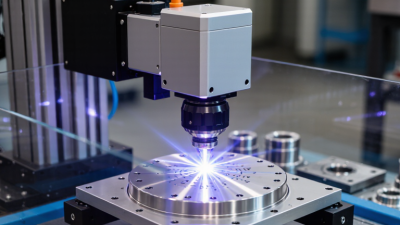
A laser part marking machine converts electrical energy into a tightly focused beam. Its source generates light, and mirrors called galvanometers steer the beam across the part. A focusing lens concentrates energy into a small spot. Depending on material and settings, the beam changes the surface through oxidation, annealing, engraving, or coating removal. The controller turns a digital design into a timed path of pulses. Tiny details matter. Focus height, pulse duration, and scan speed affect edge sharpness and contrast. A stainless-steel tag may show a dark mark without a deep cut; a plastic component may need a different wavelength to avoid melting.
Fiber, CO2, and UV systems suit different materials, so “laser marking” is not one universal process. Grand View Research estimated the global laser marking market at USD 3.06 billion in 2023 and forecast an 8.3% compound annual growth rate from 2024 to 2030. That growth reflects wider industrial use, but it does not mean every machine fits every production line. In practice, samples should be tested under real line speed and lighting. A mark that looks crisp on a bench can fade in a dusty workshop. Operators also need extraction for process fumes and a stable fixture to prevent slight shifts. Setup is often the weak link. One detail still gets overlooked: surface finish can change the result.
Top 10 Laser Part Marking Machines for Buyers — How Laser Part Marking Machines Work
Laser marking systems use a focused beam to alter a material’s surface, for example through annealing, engraving, or ablation. Wavelength affects how the beam interacts with different materials. The chart shows commonly used typical wavelengths; the horizontal axis uses a logarithmic scale so all three values are easy to compare.
Key Laser Types and Marking Methods
Laser part marking depends on both the beam source and the surface change required.
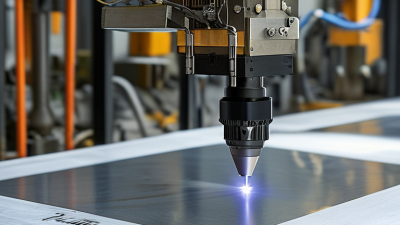
Fiber lasers suit metals such as stainless steel and aluminum, producing fine, durable marks. CO2 lasers typically mark paper, wood, glass, and many plastics. UV lasers deliver lower heat input, making them useful for sensitive plastics and small components.
These are practical tendencies, not guarantees; coatings and material grades can change results.
Marking methods include engraving, annealing, and surface-color change.
Engraving removes material, leaving a tactile groove. Annealing heats metal without cutting deeply, which can preserve a smooth surface. On plastics, foaming or color change may create contrast with little material removal.
MarketsandMarkets estimated the laser-marking market at $3.4 billion in 2023 and forecast $5.9 billion by 2028. This signals growing industrial interest, but market growth does not prove one laser type fits every production line.
Tips:
Test the exact material and finish before choosing a machine. Check mark contrast, cycle time, and readability after cleaning or abrasion. A fast sample is not enough. Buyers sometimes focus too heavily on wattage; beam quality, lens choice, and fixture stability also affect results. If a part is curved or reflective, request a production-like trial rather than relying on a flat sample.
What Buyers Should Compare Before Choosing a Machine
Choosing a laser marking machine starts with the parts, not the brochure. List the materials, coatings, shapes, and smallest text you need to mark. Fiber sources often suit metals, while other laser types may work better on plastics or sensitive surfaces. Verify compatibility with sample parts; material names alone can hide big differences. Small details matter.
Compare the usable marking area with your largest part and fixture. A wider field may reduce repositioning, but can affect mark quality. Ask for a test using your actual text, logo, or code. Check contrast, edge sharpness, and readability after cleaning or normal handling. Cycle time matters, but a fast mark is not useful if operators must repeat it. Review the software, file formats, and ability to manage repeated jobs.
Safety and ownership costs deserve equal attention. Check the enclosure, interlocks, fume extraction needs, footprint, power requirements, training, and service availability. Request a clear breakdown of likely maintenance and replacement costs. It is tempting to rank machines by speed alone; that is too simplistic. A slower system may fit a small production cell better, though I would still question any estimate that lacks a real-part trial.
Top 10 Laser Part Marking Machines Compared
Top 10 Laser Part Marking Machines for Buyers
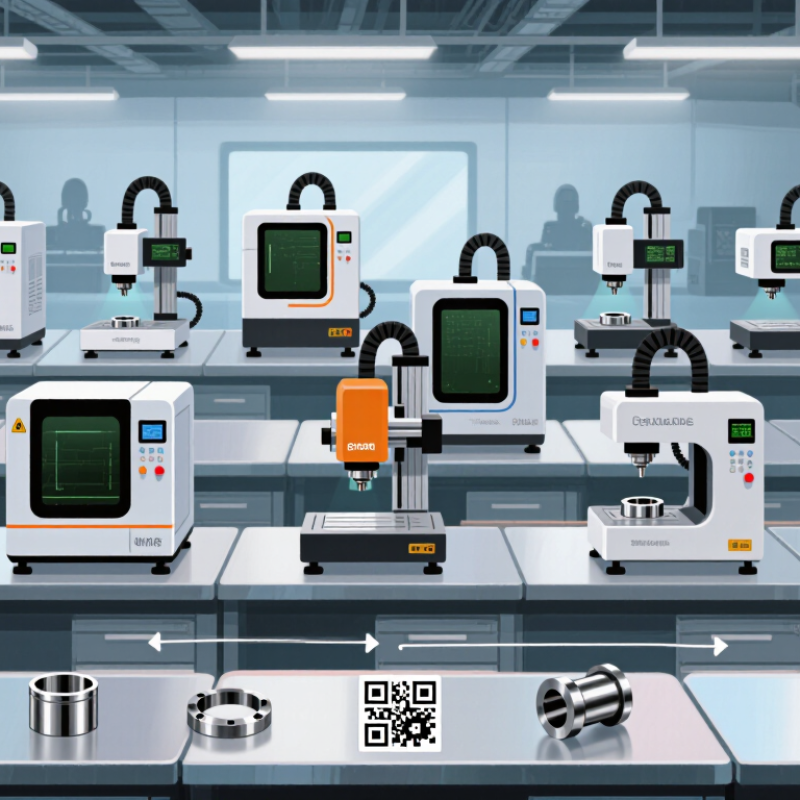
Comparing ten laser part-marking setups is more useful when the differences are clear. A compact fiber machine suits many metal parts and small work areas. Higher-power fiber systems can mark faster, but may be unnecessary for light production. MOPA fiber offers adjustable pulse control for finer contrast on some metals. UV systems are often considered for heat-sensitive plastics. CO2 machines suit many non-metal materials, while green lasers can help with certain reflective or delicate surfaces.
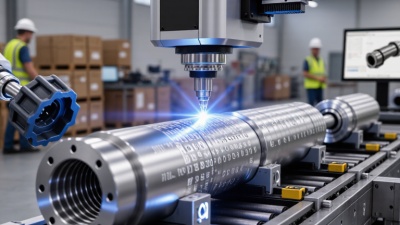
That matters. A benchtop enclosure prioritizes contained, repeatable work. Conveyor-fed systems support steady production; rotary fixtures handle cylindrical parts. A portable enclosed unit may fit maintenance tasks, though mobility can mean fewer automation options. That makes ten.
For a fair comparison, check the same sample parts on each suitable machine. Look closely at edge sharpness, contrast, cycle time, and whether the mark stays readable after handling. Also compare working area, extraction needs, fixture changes, software, and operator training. A machine that marks a flat steel plate well may struggle with curved plastic components.
Small details matter.
Published speed figures can be hard to compare because test materials and mark sizes differ. Ask for a sample using your actual part and marking pattern. The shortlist is only a starting point; budget, volume, and material mix may change the ranking.
Matching Machines to Materials and Production Needs
Choosing a laser marking machine starts with the material, not the catalogue. Fiber systems commonly suit metals and durable plastics; CO2 sources often mark wood, paper, and some polymers. UV lasers can reduce heat impact on sensitive plastics and glass, but results depend on the exact grade, coating, and finish. Test the production material, not a convenient substitute. A 2023 Grand View Research market report valued the global laser marking market at USD 2.9 billion in 2022 and forecast 8.2% annual growth through 2030. That signals rising demand, but it does not tell buyers which machine fits their parts. A test coupon can still mislead if its surface differs from a real component.
Production details matter just as much. The International Federation of Robotics reported 553,052 industrial robots installed worldwide in 2022. That figure is not specific to marking lines, yet it highlights the value of checking automation compatibility. Compare cycle time, loading method, fixture access, extraction, enclosure, and software integration. For a small workshop, a simple enclosed unit may outperform a faster system that needs constant adjustment. On a high-volume line, verify the mark remains readable at actual belt speed. Ask suppliers to mark samples and measure contrast, depth, and repeatability. Also check maintenance access and consumable costs. One caveat: a perfect sample does not guarantee stable results across every batch. Production trials may reveal surprises.