
7 Tips for Choosing Industrial Marking Systems
Industrial Marking Systems do more than print a date or serial number. They help manufacturers identify products, trace batches, and keep information readable through handling and storage. On a fast packaging line, a blurred code can trigger rework; on a metal component, a mark that fades under heat may fail its purpose. Small details matter.
Choosing a system means matching the marking method to the product and the production environment. Consider line speed, surface material, required contrast, code size, and how long the mark must remain legible. A printer that works well on a cardboard carton may not suit a curved plastic bottle or a dusty metal part. Some installations also need careful integration with conveyors, sensors, and existing software. The machine is only one part of the setup.
The seven tips in this guide focus on practical questions to ask before investing: What will be marked? How much maintenance can the team manage? Are supplies easy to source? What happens when the line stops? These questions can reveal costs that a purchase price alone will not show. No checklist removes every surprise. A sample mark tested on real materials is often more useful than a polished brochure, though even a good test may not reproduce months of production. Use the guidance to compare options, involve the people who run the line, and choose a system that fits today’s needs without ignoring future changes.
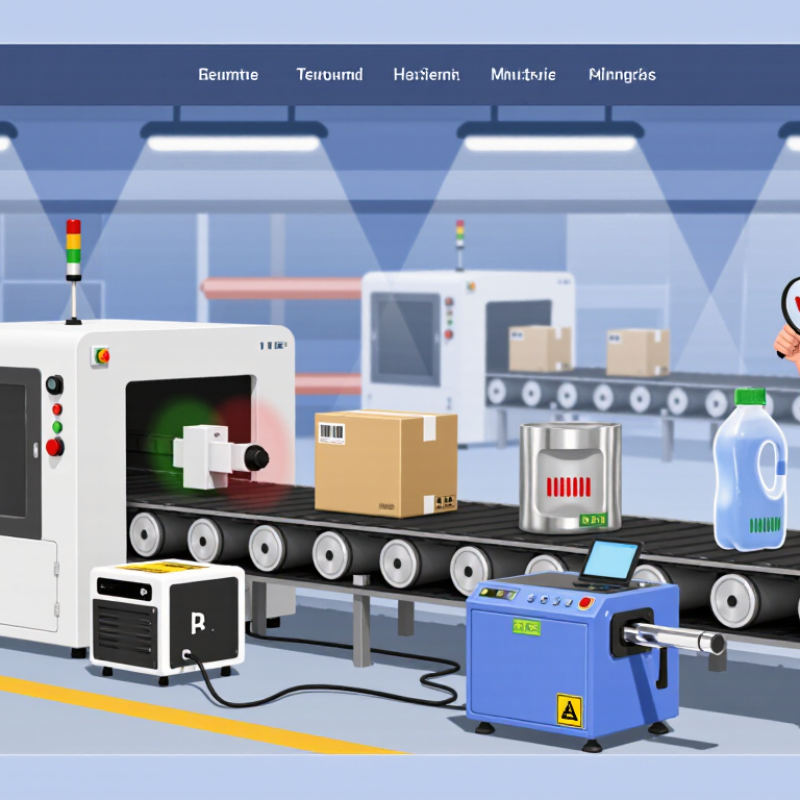
Define the Marking Requirements for Your Industrial Application
Before selecting an industrial marking system, define what the mark must do in daily production. Will it identify a part, show a lot code, or remain readable for years? Specify the material, marking area, character size, and required placement. A code that looks clear on a flat sample may blur on a curved, oily component.
Describe the part’s real journey. Consider heat, abrasion, cleaning agents, outdoor exposure, and handling after marking. A label on a carton faces different conditions from a mark on a metal housing near a hot process. That matters. Also note line speed, part orientation, and available space around the marking station. These details affect integration and consistency.
Set measurable acceptance criteria before requesting equipment trials. For example, define minimum legibility, mark location tolerance, and acceptable cycle time. Test the actual production material, not a convenient substitute. Include typical surface variation and realistic line conditions. One detail is easy to miss: operators may load parts slightly differently across shifts. A trial should reveal that. Requirements can still change; record uncertain assumptions rather than treating them as facts. A clear, practical specification gives suppliers a fair basis for recommending a suitable marking method.
| Requirement to Define | Questions to Ask | Example Application Data | Why It Matters |
|---|---|---|---|
| 1. Substrate and surface | What material and surface condition must be marked? | Aluminum component; machined surface; marking area approximately 30 × 15 mm. | Material, coating, curvature, and surface finish affect mark contrast, adhesion, and readability. Validate the process on representative production parts. |
| 2. Mark content and size | Which information is required, and how much space is available? | Human-readable part number, batch code, and a 12 × 12 mm two-dimensional code. | Text length, code dimensions, and required quiet zones determine the usable layout and may limit marking speed or resolution. |
| 3. Durability and service environment | What must the mark withstand during processing and use? | Parts are exposed to handling, oil, and periodic cleaning; the mark must remain legible after assembly. | Testing against the actual chemicals, abrasion, heat, and cleaning methods helps establish whether the mark will remain readable over its intended life. |
| 4. Readability and verification | How will operators or downstream equipment read and check the mark? | Code is scanned by a fixed reader at the next workstation; printed characters are also checked visually. | Define the reader, viewing distance, lighting, and acceptance criteria early. Code quality can be verified against the applicable specification, such as ISO/IEC 29158 for direct part marks. |
| 5. Production rate and line integration | How many parts must be marked, and where does marking fit in the cycle? | One mark per part; target line cycle of 8 seconds; part is presented in a repeatable fixture. | Marking time is only part of the cycle. Include loading, positioning, data transfer, verification, and any required safety interlocks when assessing throughput. |
| 6. Traceability and data handling | Where does the mark data come from, and must each item have a unique identity? | Serial number and batch data supplied by the production control system; records retained for product traceability. | Confirm data format, communication method, error handling, and record retention. These requirements affect controls integration and help prevent duplicate or incorrect marks. |
| 7. Installation, safety, and maintenance | What workspace, operator controls, and upkeep are needed? | Marking station installed inside a guarded cell; routine cleaning and scheduled inspection included in the maintenance plan. | Available space, guarding, ventilation where applicable, access for service, and consumables should be assessed before selecting and installing a system. |
Related Posts
-

2026 Best Industrial Marking Systems for Global Buyers
-

Innovative Industrial Marking Systems You Need to Know About
-

The Ultimate Guide to Choosing the Best Industrial Marking Systems for Enhanced Traceability
-

China Top Fiber Laser Enclosure Manufacturers
-

Ultimate Guide to Choosing the Best Fiber Laser Enclosure for Optimal Safety and Efficiency
-

How to Choose a Dot Pin Marking Machine in 2026?