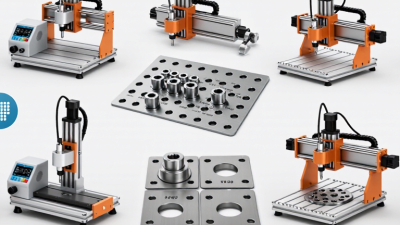
China Top 10 Dot Peen Engraver Manufacturers

China’s top 10 Dot Peen Engraver manufacturers deserve comparison by more than price or catalogue claims. A marking head may look similar across two machines, yet behave differently on a curved steel part or a small aluminium plate. Buyers should examine marking depth, character consistency, controller usability, and support for their actual production workflow. A sample mark matters. Ask how it was made, on what material, and at what speed.

Quality expert W. Edwards Deming is widely associated with the principle, “Quality comes not from inspection, but from improvement of the production process.” His words were not about dot peen marking specifically, but the idea fits: reliable identification starts with a stable process, not just a final check. This guide compares manufacturers through practical questions, including machine configuration, service responsiveness, spare parts, and application testing. Look for clear evidence, not just polished product photos. Small details count. Still, a ranking cannot predict every factory’s needs; a compact bench unit may suit a workshop but fail on a busy line. That is worth admitting. Use the shortlist as a starting point, then confirm performance with your own parts, marking layouts, and operating conditions.
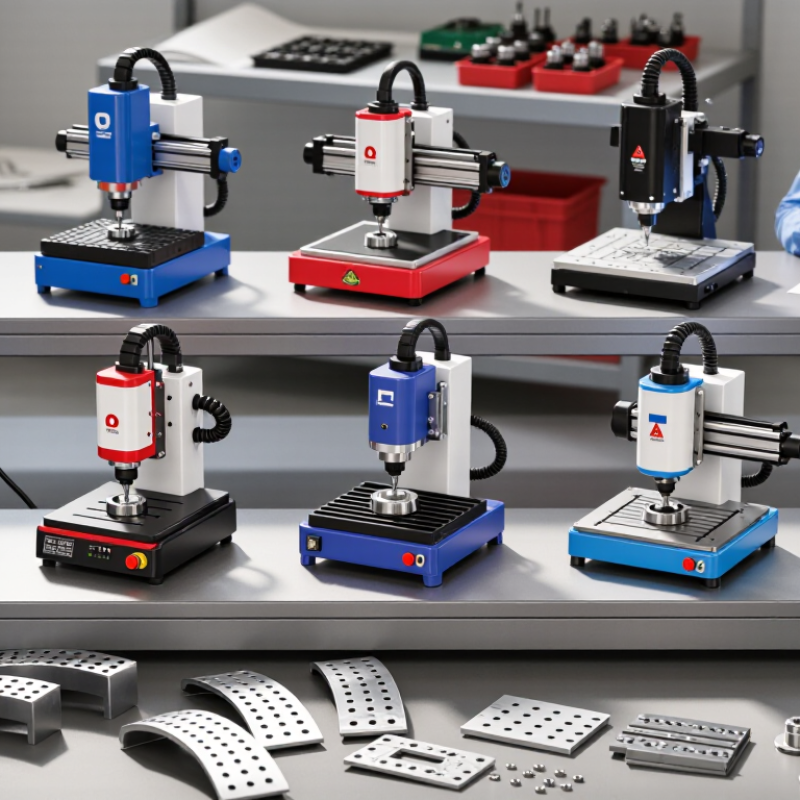
China Top 10 Dot Peen Engraver Manufacturers

How Dot Peen Engraving Works and Where It Is Used

Dot peen engraving creates marks by driving a hardened stylus repeatedly into a surface. A motor or pneumatic mechanism controls the stylus, forming characters, numbers, or two-dimensional codes from closely spaced indentations. The result is usually permanent and remains readable after ordinary handling. No ink is needed. Mark depth and spacing depend on the material, stylus, and machine settings. On a steel part, the process can leave a neat, tactile code; on thin or delicate material, excessive force may distort the surface.

Manufacturers use dot peen marking on engine parts, tools, pipes, and metal components that need identification during production or service. It suits many workshop environments because the equipment can mark curved or flat surfaces and withstand some dust and vibration. Setup still matters. A poorly supported part can shift, making a code difficult to scan. Deloitte and MAPI’s 2019 Smart Factory Study reported that 86% of surveyed manufacturers viewed smart factory solutions as a future competitiveness driver. That figure concerns smart manufacturing broadly, not dot peen adoption specifically, but it highlights the value of reliable production data. A permanent mark can link a component to its inspection and maintenance records.

Criteria for Evaluating Dot Peen Engraver Manufacturers

When comparing dot peen engraver manufacturers, ask for test marks on your own parts, not only polished samples. Check whether the machine produces readable, consistent characters on your actual material, including curved surfaces and varied part heights. Test real parts. Request measured cycle times, marking depth, and repeatability figures, then confirm how those figures were recorded. Inspect the pin, guide, and fixture design; these affect wear and mark consistency. Ask for a sample maintenance schedule and the availability of replacement pins.

Service matters as much as the mark. Deloitte and The Manufacturing Institute’s 2024 talent study estimates that 3.8 million U.S. manufacturing jobs may be needed by 2033, with 1.9 million potentially unfilled. This is not China-specific, but it highlights why clear training materials and responsive technical support deserve attention. Check whether manuals are understandable, remote troubleshooting is available, and common spare parts can be supplied promptly. Check the basics. Compare warranty coverage, software updates, safety documentation, and total operating costs—not just the quoted machine price. A polished demo can still mislead; I would also ask for references from customers using similar parts and production volumes.

China Top 10 Dot Peen Engraver Manufacturers - Criteria for Evaluating Dot Peen Engraver Manufacturers

Suggested evaluation framework for comparing manufacturers. The weights are recommended starting points, not ratings of specific companies. Score each criterion from 1 (poor or unsupported) to 5 (excellent and verified); calculate weighted points as weight × score ÷ 5.

No. Evaluation criterion Suggested weight What to verify Useful evidence Score (1–5) Weighted points
1 Marking quality and consistency 15% Assess legibility, character uniformity, mark depth control, and repeatability on representative parts. Sample marks made on the buyer’s material and geometry; repeat tests using the same settings. — —
2 Application and material suitability 12% Confirm suitability for the intended metals, surface conditions, part sizes, and marking locations. Documented application trials covering the actual workpiece and marking requirements. — —
3 Marking head and workpiece access 10% Check whether the machine configuration can reach the required surfaces and accommodate part dimensions and fixtures. Dimensional drawings, working-area information, and a physical fit check or sample setup. — —
4 Software and data handling 10% Review text, serial numbers, date codes, logos or symbols, job storage, and variable-data workflows as applicable. Live software demonstration using representative marking content and the required data-entry process. — —
5 Production integration 10% Determine whether the equipment can fit the required manual, fixture-based, or automated production workflow. Interface documentation, connection options, cycle demonstration, and integration scope. — —
6 Build quality and maintainability 10% Inspect construction, accessible service points, replaceable wear components, and availability of maintenance instructions. Equipment inspection, maintenance schedule, parts list, and service procedure documentation. — —
7 Safety and compliance documentation 8% Check applicable safeguards, operating instructions, electrical documentation, and destination-market requirements. Risk and safety information, declarations or certificates where applicable, and manuals for the supplied configuration. — —
8 Training and after-sales support 8% Clarify commissioning, operator training, troubleshooting channels, support hours, and spare-parts arrangements. Written support terms, training plan, escalation process, and parts availability information. — —
9 Customization and technical responsiveness 7% Evaluate the ability to address special fixtures, workholding, marking layouts, or workflow requirements. Written technical proposal, feasibility review, and clear definition of included modifications. — —
10 Total cost and commercial clarity 10% Compare the full quoted scope, delivery terms, warranty, training, installation, consumables, and expected maintenance costs. Itemized quotation and written commercial terms; compare equivalent configurations. — —
Total suggested weight 100% Maximum weighted score 100

Scoring guide: 1 = not demonstrated; 2 = below requirements; 3 = meets basic requirements; 4 = exceeds requirements with supporting evidence; 5 = fully verified against the intended application.

China’s Top 10 Dot Peen Engraver Manufacturers

China’s Top 10 Dot Peen Engraver Manufacturers

China’s top 10 dot peen engraver manufacturers should be compared by application fit, not catalogue size. A buyer marking steel nameplates needs different equipment from a factory marking curved castings. Check marking depth, character consistency, fixture design, and software compatibility. Ask for sample marks on your actual part. Small details matter.

Deloitte and MAPI’s 2019 Smart Factory Study reported that 86% of surveyed manufacturers viewed smart factory initiatives as a primary driver of competitiveness over the following five years. This is not dot peen market data, but it shows why reliable machine data and production integration matter. When assessing suppliers, ask about controller connectivity, job storage, and service response times. Request measurable test results, not only demonstration videos.

A practical shortlist should include manufacturers able to document repeatability across different operators and work shifts. Check spare-part availability and training, too. A low purchase price can become costly if a stylus or fixture delays production. Not every shop fits. Published specifications rarely reveal setup difficulties, and sample tests cannot predict every production condition. Treat rankings as a starting point, then verify claims against your parts and workflow.

Comparing Product Ranges, Automation, and Customization

China Top 10 Dot Peen Engraver Manufacturers
Comparing Product Ranges, Automation, and Customization

Assessing leading Chinese dot peen engraver manufacturers is easier when comparing machine capability, not catalog size alone. Product ranges may include handheld units for large steel parts, benchtop systems for small components, and integrated stations for production lines. Check marking area, supported materials, pin force, and software compatibility against your actual parts. A clear product sheet matters. So does a sample mark.

Automation separates basic equipment from line-ready systems. Some machines offer barcode input, fixture sensors, automatic loading, or communication with factory software. These options can reduce manual entry and placement errors, but they also add setup work. Ask whether the supplier can demonstrate the full sequence using your part dimensions and production volume. Customization may cover fixtures, fonts, marking depth, languages, and safety enclosures. Confirm which changes are standard and which require engineering fees or longer lead times. Details can shift.

Tips: Send a drawing and representative part before comparing quotations. Request a test mark, cycle time, and a list of included accessories. Compare warranty terms and spare-pin availability, too. Published speed figures may reflect ideal conditions, so verify them on your production setup.

China Top 10 Dot Peen Engraver Manufacturers — Comparison Criteria

How to read this chart: These suggested weights provide a framework for comparing manufacturers across product range, automation, and customization. They are evaluation weights—not measured ratings or verified company-specific data. Apply the same criteria consistently when assessing a shortlist of 10 manufacturers.

Choosing a Manufacturer for Your Marking Requirements

Choosing a dot peen engraver manufacturer starts with the mark, not the catalogue. Define your material, marking area, cycle time, and required character or code size. Ask for sample marks on your actual parts. A mark that looks sharp on flat steel may become faint on a curved casting. Fit matters. Compare marking depth, pin adjustment, fixture options, and how easily operators can change settings.

Check how the machine handles real production conditions. Request a demonstration using your line speed and part geometry. Ask about controller backups, data export, spare styluses, and response times for technical support. Review the warranty and maintenance schedule in writing. A low purchase price can feel less attractive after repeated stoppages. Some details are easy to overlook.

Integration deserves attention, too. Deloitte’s 2024 Smart Manufacturing Survey reported that 92% of surveyed manufacturers expect smart manufacturing to drive competitiveness within three years. That makes traceable settings and reliable data transfer useful selection criteria, even for a standalone marker. Compare manufacturers on documented test results, not promises alone. One weakness in this approach: a factory test cannot reproduce every shift, operator, or surface variation. Keep that uncertainty visible when evaluating China’s top 10 dot peen engraver manufacturers.